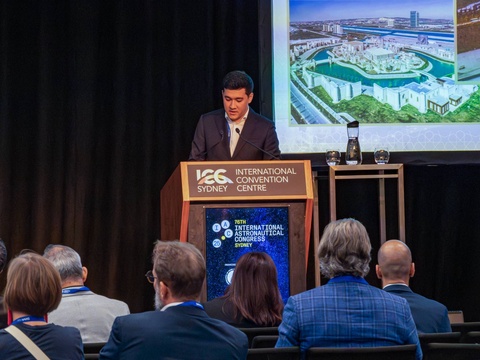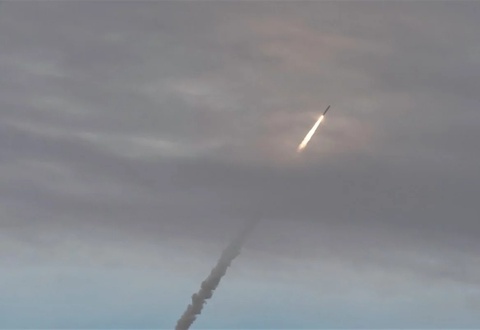

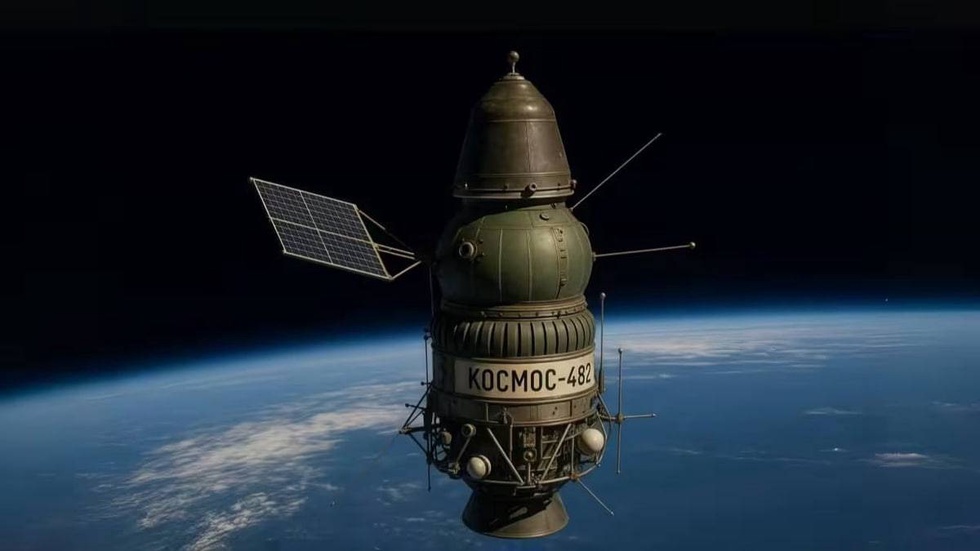
According to Akhror Agzamov, head of the Department for the introduction of new technologies at the Uzcosmos agency, indeed, on March 31, 1972, the Kosmos-482 interplanetary spacecraft was launched into space as part of the Venus program of the former Soviet Union. However, due to the failure of the last stage of the launch vehicle, it remained in Earth orbit.
According to preliminary calculations, the fall of the wreckage of the device to the ground may occur in the period from 9 to 11 May.
It is still difficult to say exactly where Kosmos-482 will fall. The probability of its falling on the territory of Uzbekistan is currently estimated at 0.3-0.5%.
Although most of the spacecraft burns up upon entering the atmosphere, a titanium balloon weighing about 500 kg, designed for landing and operating in the harsh conditions of Venus, is particularly dangerous. This component is likely to fall completely after entering the Earth's atmosphere. Despite having a parachute, it may not work after 53 years in space. It is expected that the speed of impact on the ground can reach 500 km per hour.
If fragments are found, it is strongly recommended to inform officials immediately and under no circumstances contact the remnants of the device, as they may contain dangerous chemicals.
It should be added that the Tashkent Machine-Building Design Bureau participated worthily in the later stages of the Venus program. It designed and manufactured devices for soil extraction and drilling for the Venera-13 and 14 (1982) and Vega-1 and 2 (1985) spacecraft. Their tests were carried out at a testing center located in the village of Nevich in the Tashkent region.