

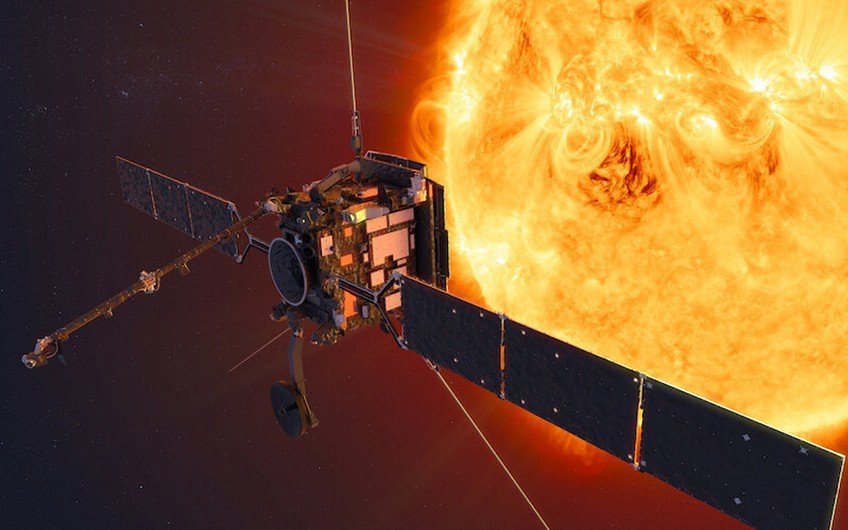
As The Report reports with reference to The Guardian, the device, developed by the European Space Agency (ESA) with the participation of NASA, dropped 15 ° below the solar equator, which made it possible to fix the southern polar region of the star.
The new images show a shimmering bright atmosphere, with temperatures reaching up to a million degrees Celsius in some places. It is interspersed with darker clouds of gas, which, although much colder, still have a temperature of one hundred thousand degrees.
"Today, for the first time in the history of mankind, we present images of the south pole of the Sun. It is our closest star, the giver of life and the potential destroyer of modern space and terrestrial energy systems, so it is extremely important that we understand how it works and learn how to predict its behavior. These new, unique images from our Solar Orbiter mission are the beginning of a new era of solar exploration," said ESA Science Director Carol Mandell.
The ESA noted that observing changes in the magnetic structure of the Sun's poles is key to predicting the solar cycle, including flares and magnetic storms that can affect the operation of power grids and satellite communications on Earth.
The $1.3 billion Solar Orbiter mission was launched in 2020.