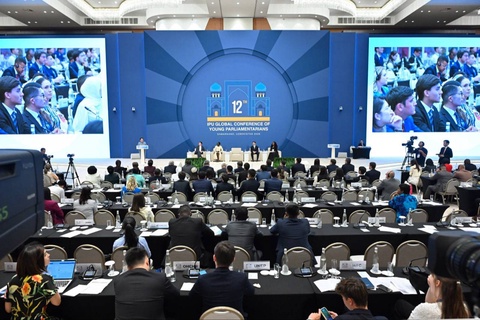

The event
was organized by the National Commission of the Republic of Uzbekistan on
Combating Human Trafficking and Decent Work in cooperation with the
International Organization for Migration.
It was
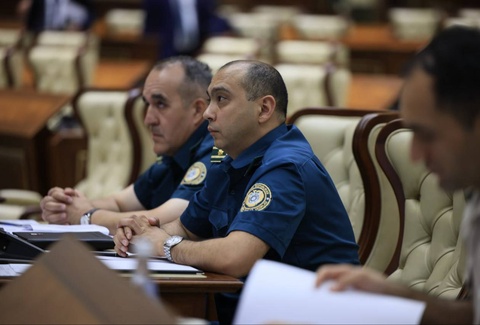
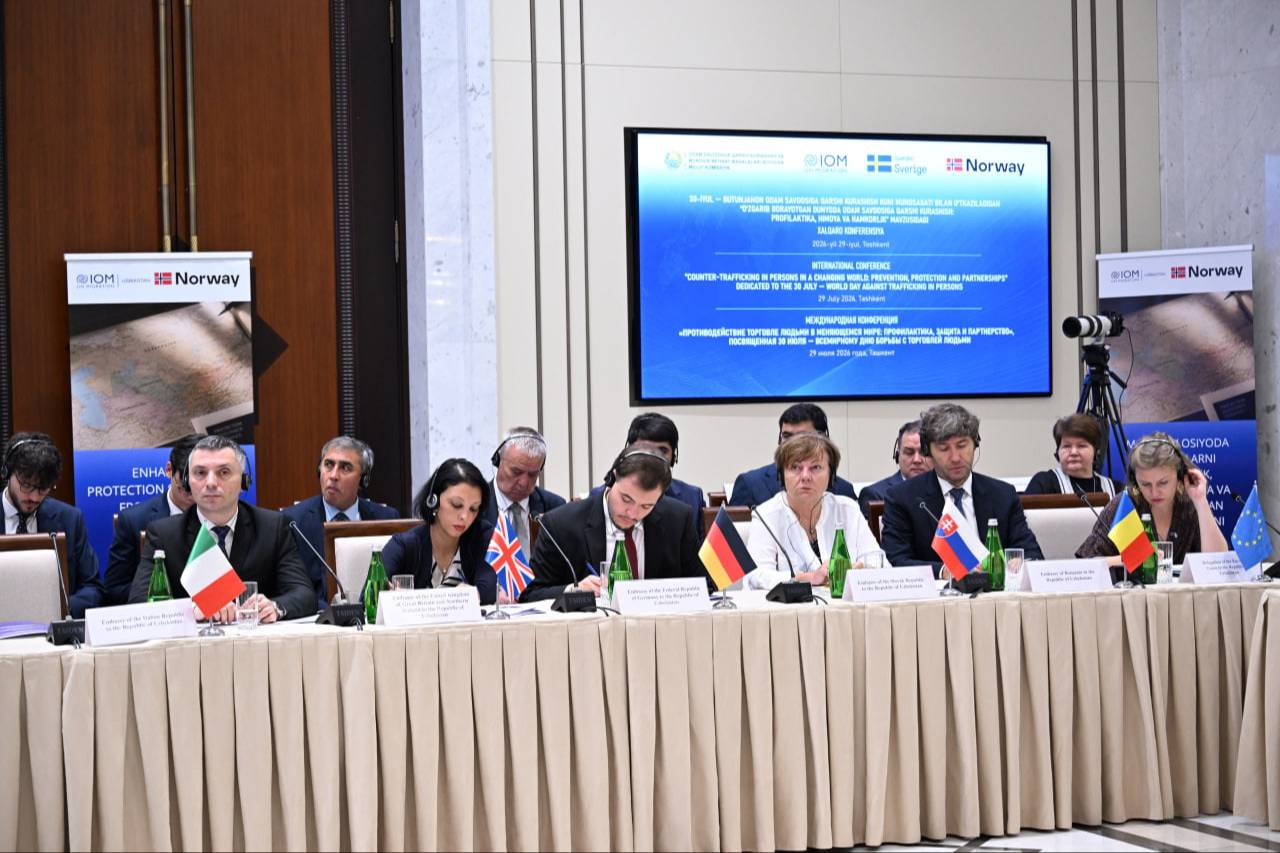
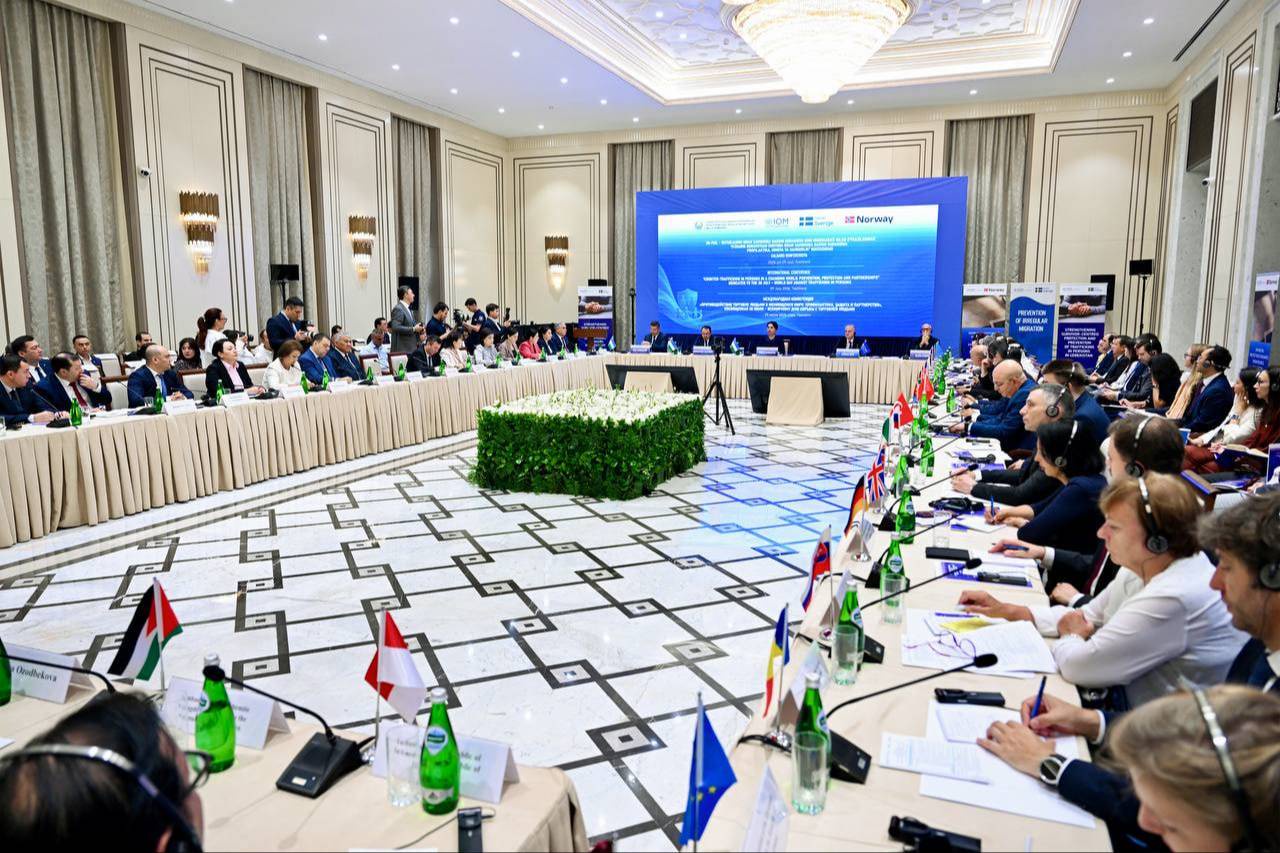
attended by representatives of government agencies, law enforcement agencies,
the judicial and legal system, international organizations, the diplomatic
corps, civil society institutions, and Central Asian countries.
The
Conference has become an important international dialogue platform aimed at
analyzing the results achieved in the field of combating human trafficking,
discussing global challenges and identifying priorities for national and
regional cooperation. During the event, attention was focused on modern threats
of human trafficking, in particular, new risks arising from digital
technologies, online recruitment platforms, fraudulent schemes and the
activities of transnational criminal networks.
Within the
framework of the global theme "Trapped in fraud", announced this year
in connection with the World Day against Human Trafficking, special attention
is paid to the issues of preventing exploitation in the digital space,
strengthening preventive measures and early elimination of risks.
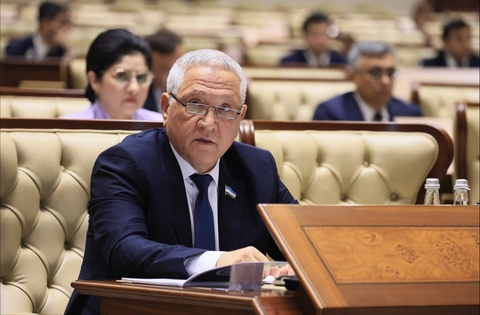
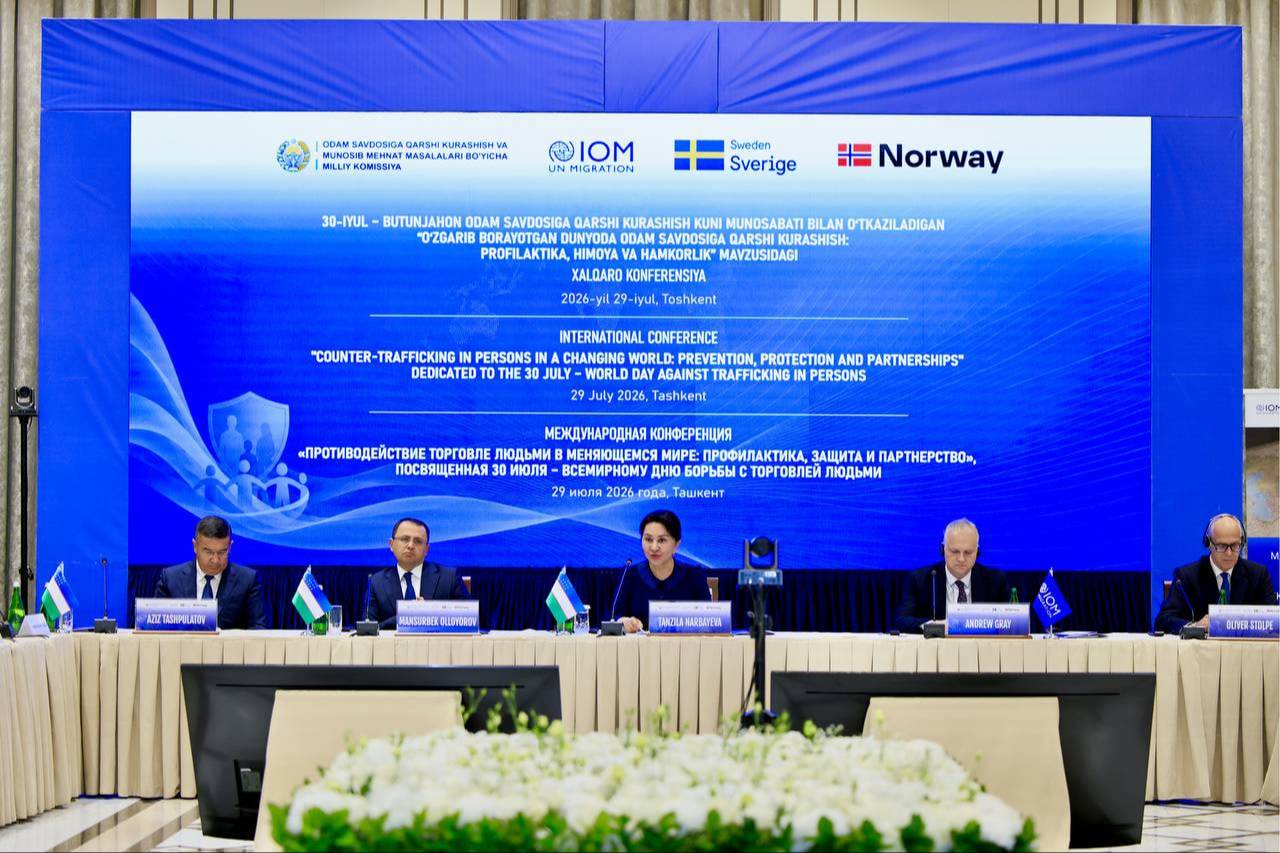
Opening the
conference, Chairman of the Senate of the Oliy Majlis, Chairman of the National
Commission on Combating Human Trafficking and Decent Work Tanzila Narbayeva
noted that in the New Uzbekistan, combating human trafficking has become one of
the priorities of state policy to ensure human rights, social justice and
decent work.
Today,
human trafficking is not only a crime-fighting issue, but also a complex global
threat inextricably linked to human rights, labor relations, migration, digital
technologies, and social protection.
"The
biggest achievement in the fight against human trafficking is not saving
victims, but preventing the emergence of new victims," Tanzila Narbayeva
emphasized.
Strengthening
preventive approaches, raising legal awareness and legal culture, and improving
decent work and social protection mechanisms are also important in preventing
human trafficking.
According
to Andrew Gray, head of the representative office of the International
Organization for Migration in Uzbekistan, "human trafficking is changing
faster than ever. Criminal networks are actively using digital technologies,
and their transnational nature and complexity are growing. Therefore, the
response must also include systematic approaches aimed not only at
investigating and protecting victims, but also at preventing exploitation
before it occurs."
It was
emphasized that the recently adopted Decree of the President of the Republic of
Uzbekistan "On additional measures aimed at radically improving the system
for identifying victims of human trafficking and integrating them into
society" introduces a completely new system for early identification of
victims of human trafficking, assessment of their needs and comprehensive
coverage of social, legal, psychological and medical services in the country.
During the
event, within the framework of three thematic sessions, an exchange of views
took place on the prevention of digital threats and new forms of exploitation,
improving mechanisms for early detection, identification and protection of
victims of human trafficking, as well as their rehabilitation, redirection and
strengthening regional cooperation between the Central Asian States.
During the
discussion, it was noted that the fight against human trafficking should be
based not only on law enforcement agencies or criminal prosecution, but also on
coordinated government policies in the areas of prevention, social protection,
labor, migration, education and health.
The
participants noted that coordinated actions by government agencies, civil
society institutions, international organizations and development partners are
essential for preventing human trafficking and protecting victims.
Representatives
of the Central Asian States expressed their readiness to consistently continue
practical cooperation in protecting and assisting victims of human trafficking
and migrants at risk, as well as further improving mechanisms for cross-border
cooperation.
The
importance of improving the mechanisms for cross-border redirection of victims
between the countries of Central Asia, strengthening the operational exchange
of information between authorized bodies, launching joint training programs for
specialists and the systematic development of interparliamentary dialogue was
also noted.
Following
the conference, a communique was adopted defining priority areas for preventing
human trafficking and further strengthening practical cooperation between the
Central Asian States.