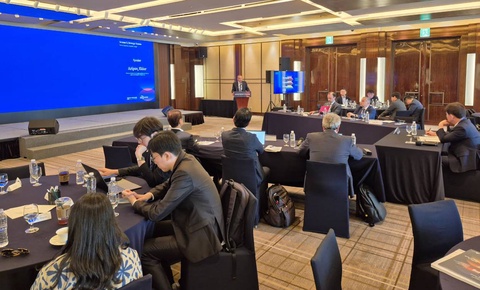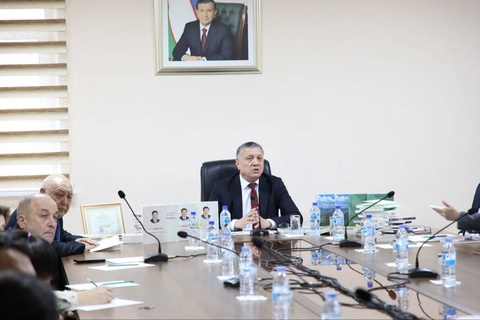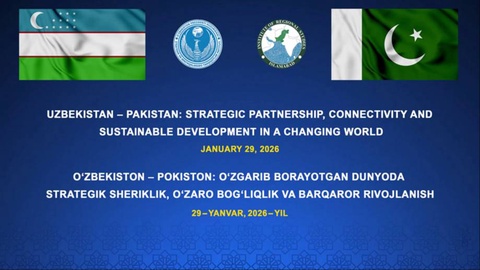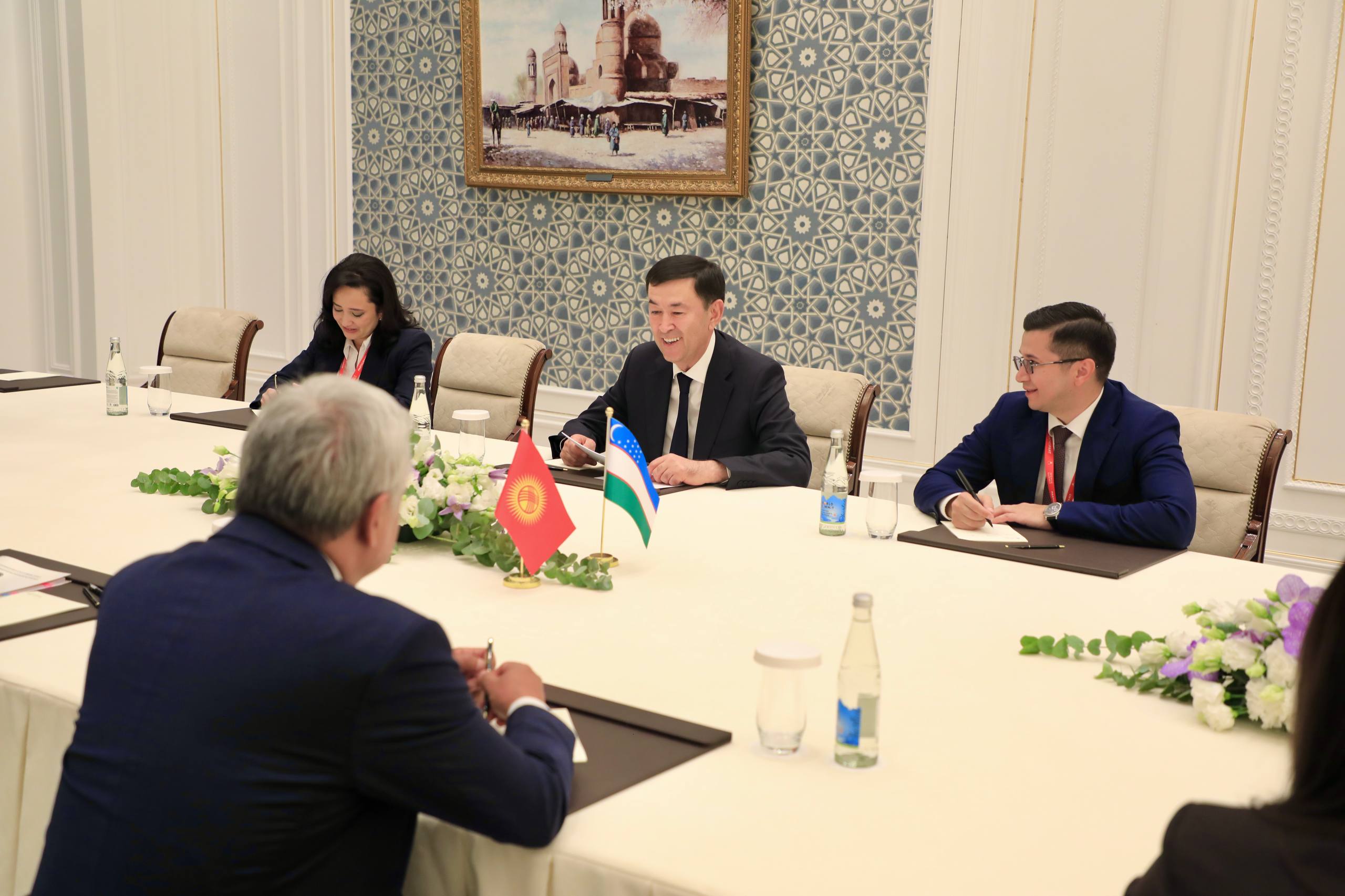

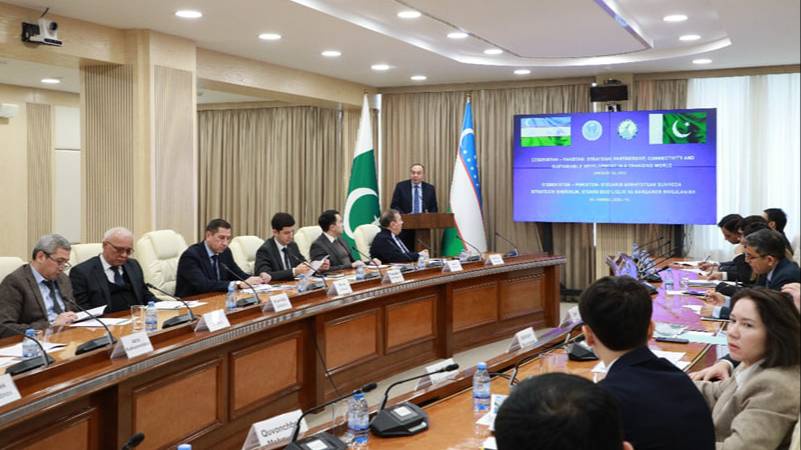
The conference was attended by the heads of diplomatic missions of the two countries, the leadership and experts of the leading analytical and educational centers of Uzbekistan and Pakistan, representatives of business and diplomatic missions.
During the conference, priority areas of cooperation between Uzbekistan and Pakistan were discussed in detail, including political dialogue and regional security issues, the development of trade, economic and cooperative ties, as well as cooperation in the fields of education, training, digitalization and new technologies.
Experts stated that relations between Uzbekistan and Pakistan have reached a qualitatively new level, transformed into a format of strategic partnership. In many ways, this became possible due to the decisive role and political will of the two heads of state. The high level of trust and constructive dialogue between the leaders of Uzbekistan and Pakistan, as well as the commonality of long-term interests in the fields of security, economy and regional development form a solid foundation for further deepening comprehensive practical cooperation.
Opening the event, ISMI Director Eldor Aripov said that Uzbek-Pakistani relations have reached a qualitatively new institutional level. According to him, the creation of the Strategic Partnership Council was a landmark confirmation of the transition to a systematic and long-term model of interaction. This approach reflects the common understanding that the rapprochement of Central and South Asia is not a temporary initiative, but an objective necessity driven by common strategic interests.
The Director of ISMI stated that the dynamics of trade and economic cooperation confirms the growing potential of bilateral ties: in recent years, the trade turnover between Uzbekistan and Pakistan has increased 12-fold, and the medium-term goal of the partners is to bring this figure to $ 2 billion.
Speaking about further priorities, the Director of ISMI stressed the importance of moving from simple trade to the formation of joint chains with high added value, as well as strengthening cooperation in the field of information technology, education and training.
Separately, Eldor Aripov focused on the strategic importance of the Trans-Afghan Corridor, emphasizing that this is not just a transport route, but a geo-economic project that can radically shorten delivery times and turn the region into a key hub of Eurasian connectivity.
Addressing the conference participants, President of the Institute of Regional Studies of Islamabad Jauhar Salim noted that "trust and constructive dialogue between the leadership of the two countries create a solid foundation for practical initiatives." He noted that relations between Uzbekistan and Pakistan cover key areas of cooperation: economy, trade, energy, education and culture.
"We see great potential in expanding joint educational programs and technological exchange. This is a strategically important moment for the region, contributing to increased market access and strengthening economic stability," the expert added.
In turn, former Finance Minister and Chairman of the Pakistan Investment Council Haroon Sharif stressed the importance of institutional solutions and private sector participation.
"Trade becomes sustainable only when there are real investments and working economic mechanisms behind it," he said.
The economist suggested creating market-oriented financial structures and joint investment platforms to support businesses. "It is important that the private sector has access to finance - this will increase the efficiency of integration," added H.Rashid. He also noted the need to develop joint transport infrastructure, including land ports and logistics hubs: "Only coordinated approaches can reduce costs and make cooperation economically beneficial."
Major General Muhammad Samrez Salik, a lecturer at the National Defense University in Islamabad, highlighted the high geo‑economic potential of the two countries.
"Pakistan and Uzbekistan can become the core of the region's economic integration if the strengths of each state are harnessed," he said.
The general also noted the strategic importance of transport corridors: "The Trans-Afghan Railway is able to shorten the cargo route from Uzbekistan to the ports of Pakistan from 35 to 3-5 days. This is a direct economic advantage that should not be missed."
The expert added: "We see a lot of unrealized trade potential. Integration through joint projects and logistics networks can change the economic landscape of the region."
Amina Khan, Director of the Center for Afghanistan, Middle East and Africa Studies at the Islamabad Institute for Strategic Studies of the Ministry of Foreign Affairs of Pakistan, emphasized the special importance of investing in human capital as the basis for sustainable partnership.
"Infrastructure connects countries, but it is people - through education, skills and technology - who ensure the sustainability of the partnership," she said.
The expert noted Uzbekistan's progress in educational reforms and digital transformation, as well as Pakistan's potential in English-language higher education, medical and research cooperation.
"Cooperation in education and technology is a low-risk, high-impact path that deepens bilateral ties and promotes regional integration," she stressed.
At the bilateral level, Amina Khan proposed the creation of a Pakistani‑Uzbek dialogue on human capital and technology for the development of technical and vocational education. According to her, "joint research helps to solve bilateral and regional problems, creating locally informed solutions that have been lacking so far."
Amina Khan also made a proposal to develop trilateral cooperation with Afghanistan, primarily with a view to scaling up various initiatives that promote connectivity between Central and South Asia. She cited the Termez International Trade Center Free Trade Zone as an example. According to her, "this is not just a border checkpoint, but a full-fledged economic system - an ecosystem of contacts between people, as well as education, medical services, trade and regional transit."
Aziza Mukhammedova, a leading researcher at the Institute of Advanced International Studies at the UMED, added that "ambitious development and integration plans are simply impossible without stable security. Joint counterterrorism measures, intelligence sharing, and defense cooperation are now seen as necessary conditions for economic growth and regional integration. Transport and trade projects, including the Uzbekistan-Afghanistan-Pakistan railway, create economic incentives and reduce instability."
Shokhjakhon Shikhnazarov, Chief Specialist of the Center for Transport and Logistics Research at the Ministry of Transport of the Republic of Uzbekistan, stressed the practical importance of transport and logistics cooperation.:
"By the end of 2025, the volume of cargo transportation through Pakistani ports reached 450 thousand tons, which is 37% higher than the previous year. This reduces delivery time and reduces logistical costs. The successful operation of the routes requires international cooperation, joint forums and pilot projects, including the development of the multimodal corridor Belarus- Russia-Kazakhstan-Uzbekistan-Afghanistan- Pakistan and new railway lines through Afghanistan."
Summing up, the conference participants summarized that the development of the Uzbek‑Pakistani strategic partnership requires a transition to a multidimensional model of cooperation based on industrial cooperation, technology, education, joint production chains and coordinated approaches to sustainable development.
Following the conference, an agreement was reached on the establishment of an Uzbek‑The Pakistan Expert Council between the Institute of Strategic and Interregional Studies under the President of the Republic of Uzbekistan and the Institute of Regional Studies of Islamabad, which will become a permanent platform for analytical support of strategic partnership, coordination of joint initiatives and preparation of recommendations for political leadership.