
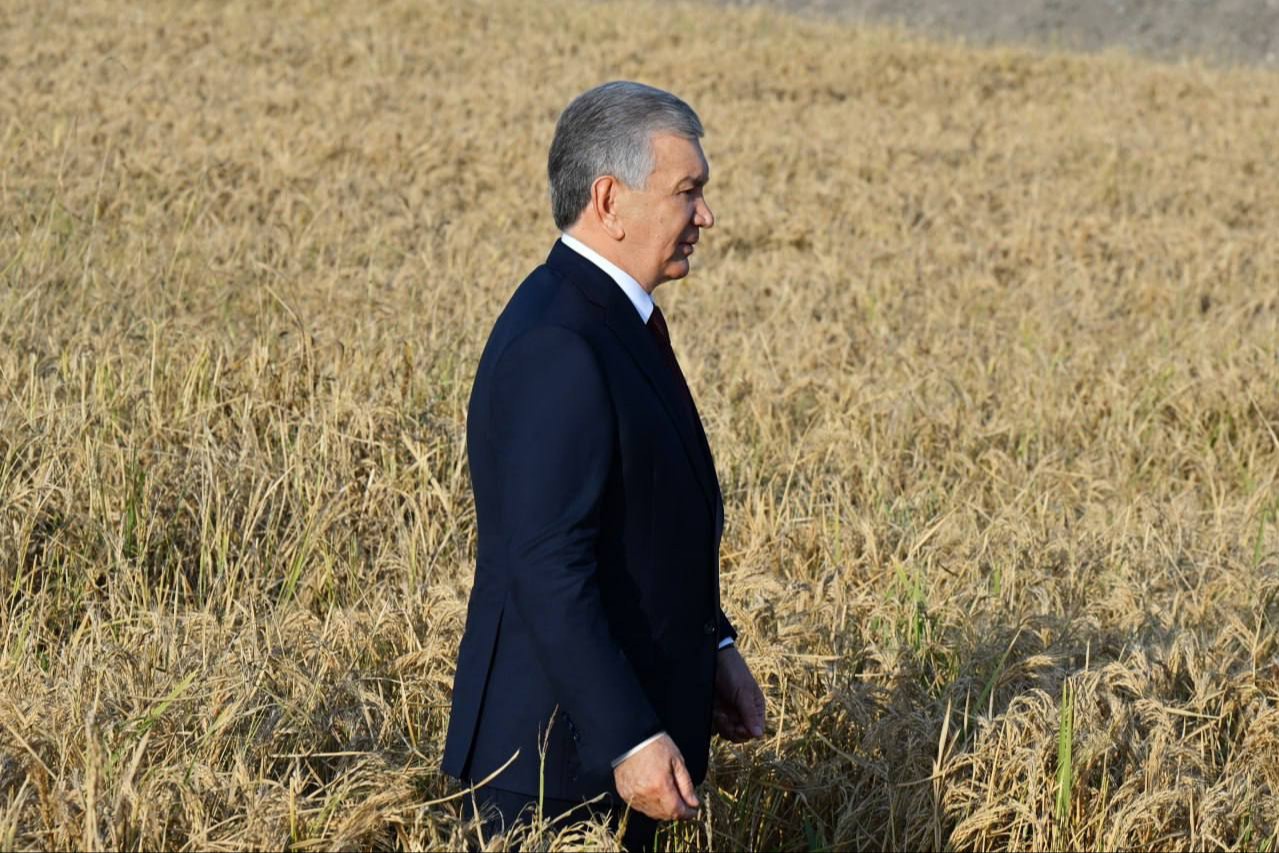
The limited liability company has established a complete production cycle, from rice cultivation to deep processing.
It is worth noting that, in the past, rice farmers worked independently and struggled to earn a decent income. The most difficulties arose during the processing stage of the harvest. In recent years, due to increased attention to the sector, significant qualitative changes have begun, and production efficiency has improved.
Today, rice cultivation in Tashkent region is also demonstrating notable progress. This year, rice was sown on 8.7 thousand hectares in the region. To introduce water-saving technologies, laser leveling was carried out on 3 thousand hectares. As a result, 60 million cubic meters of water were saved, and seed consumption was reduced by 522 tons.
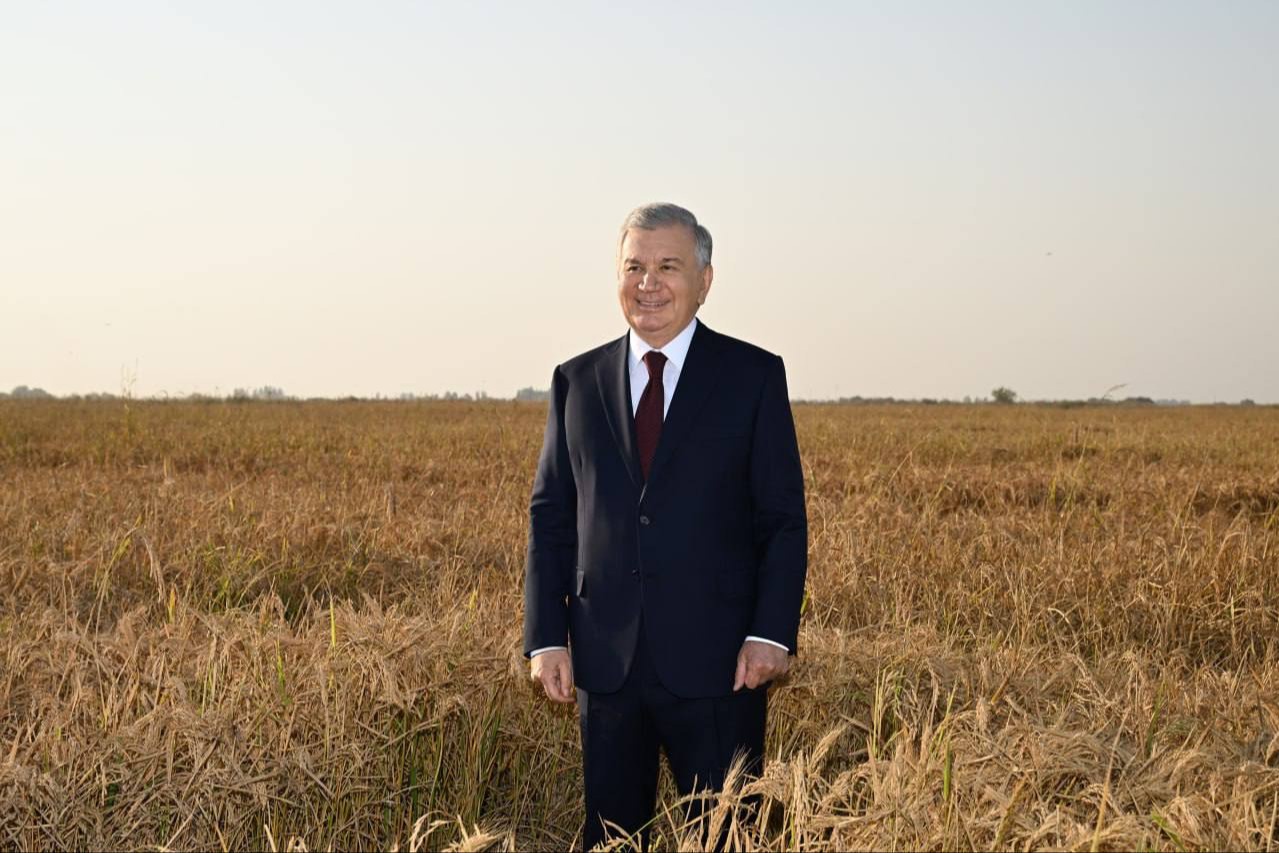
In particular, the TCT Rice cluster has cultivated the Iskandar, Gulistan, and Nukus varieties on an area of over 2,000 hectares. To date, rice has been harvested from 985 hectares, with an average yield of 65-70 centners per hectare, and in some fields reaching 80-85 centners.
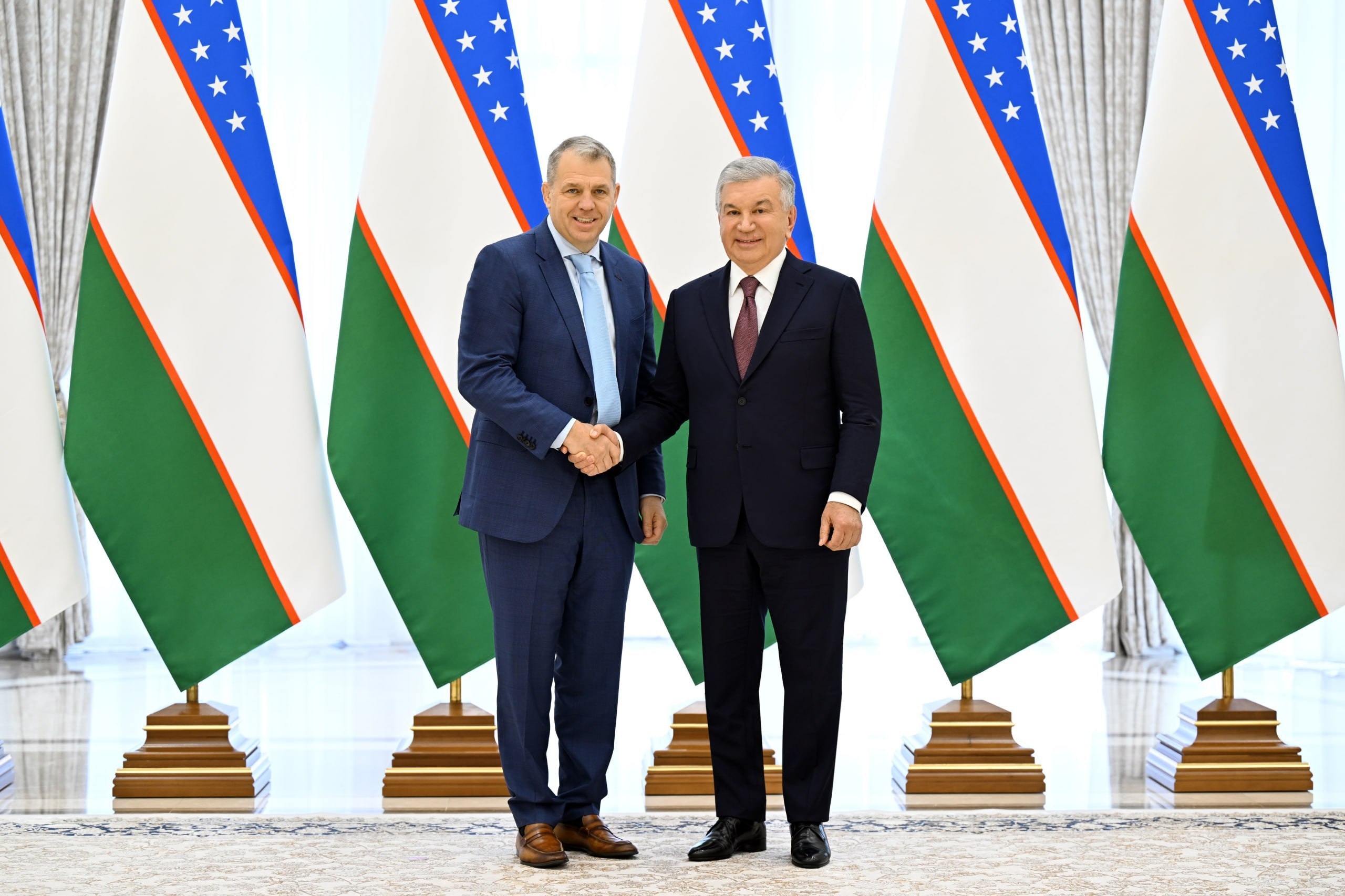
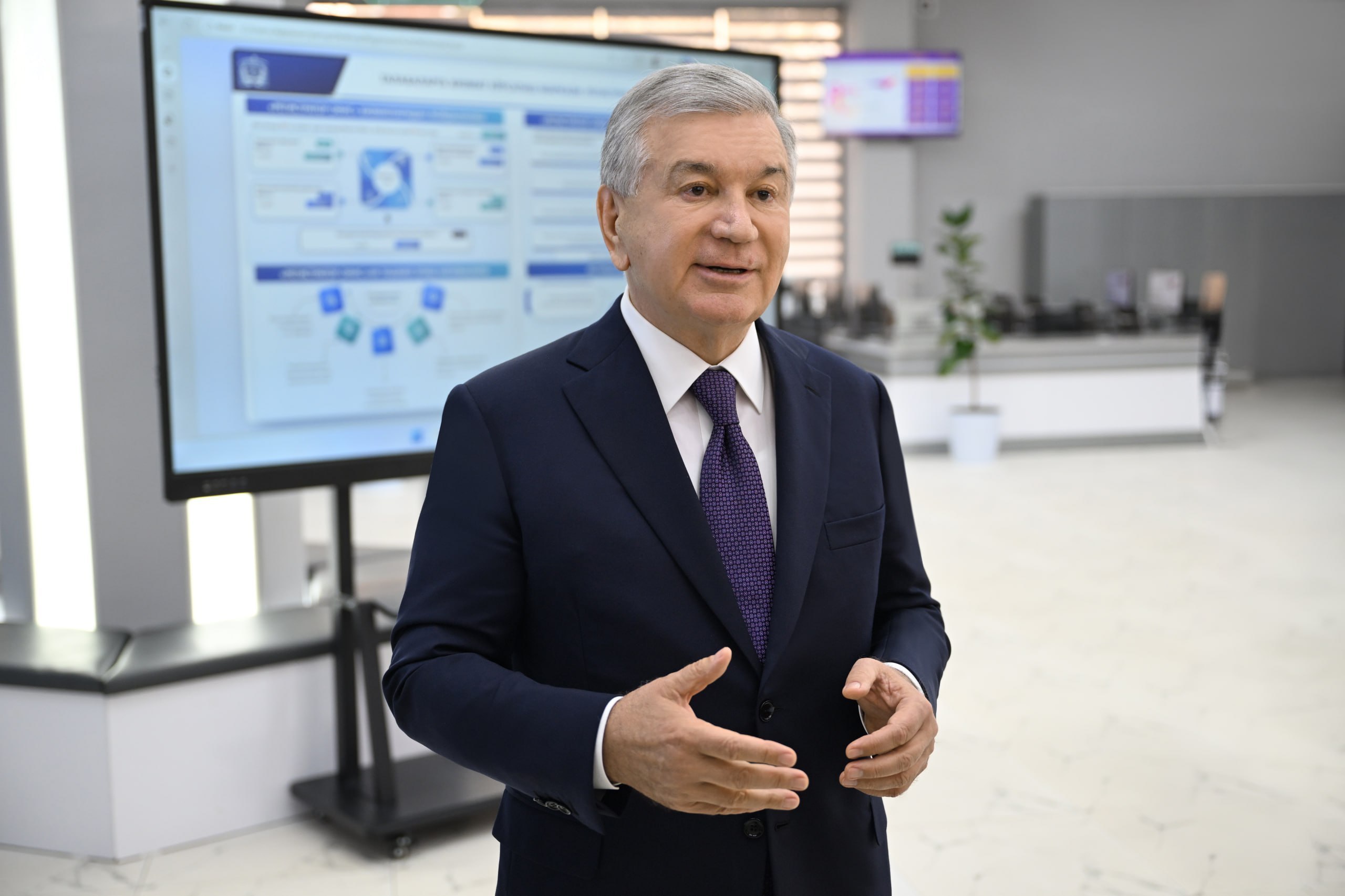
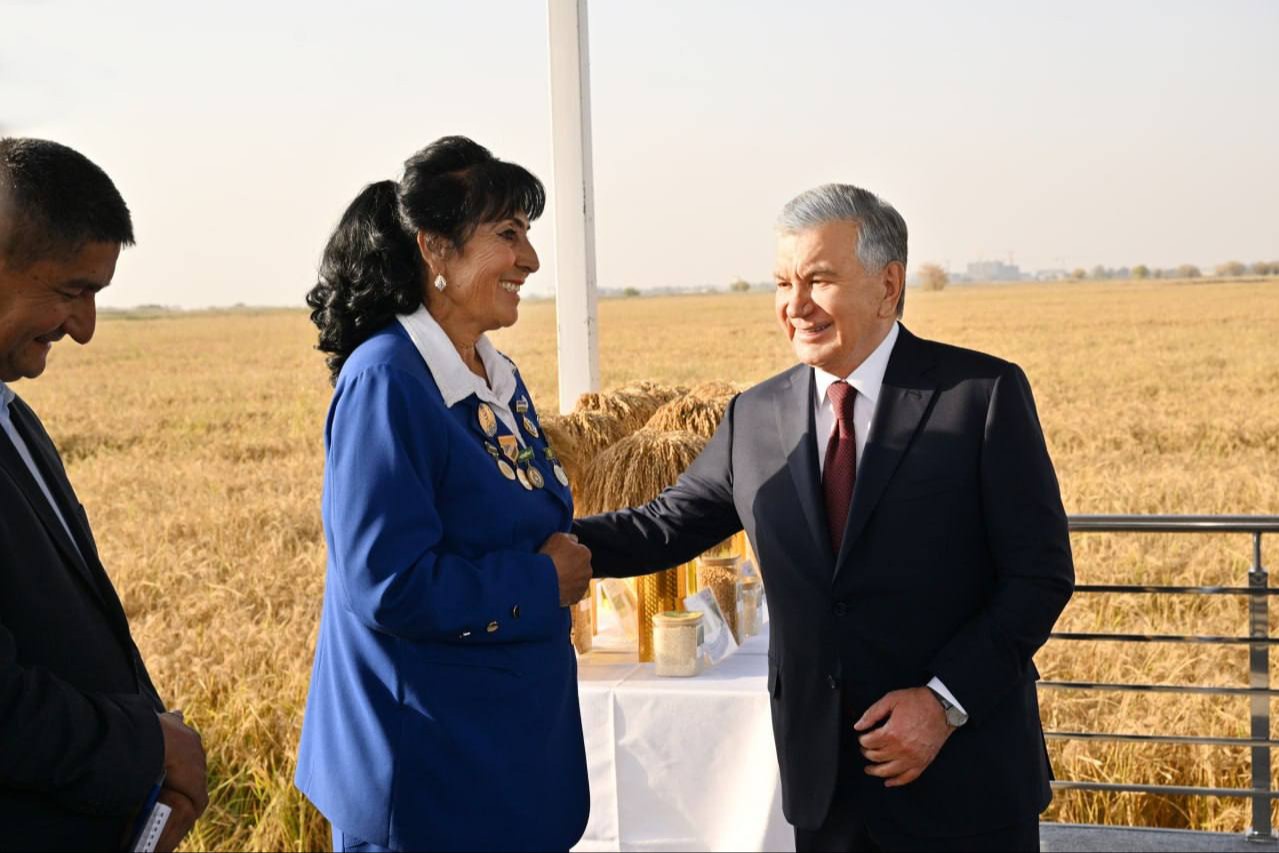
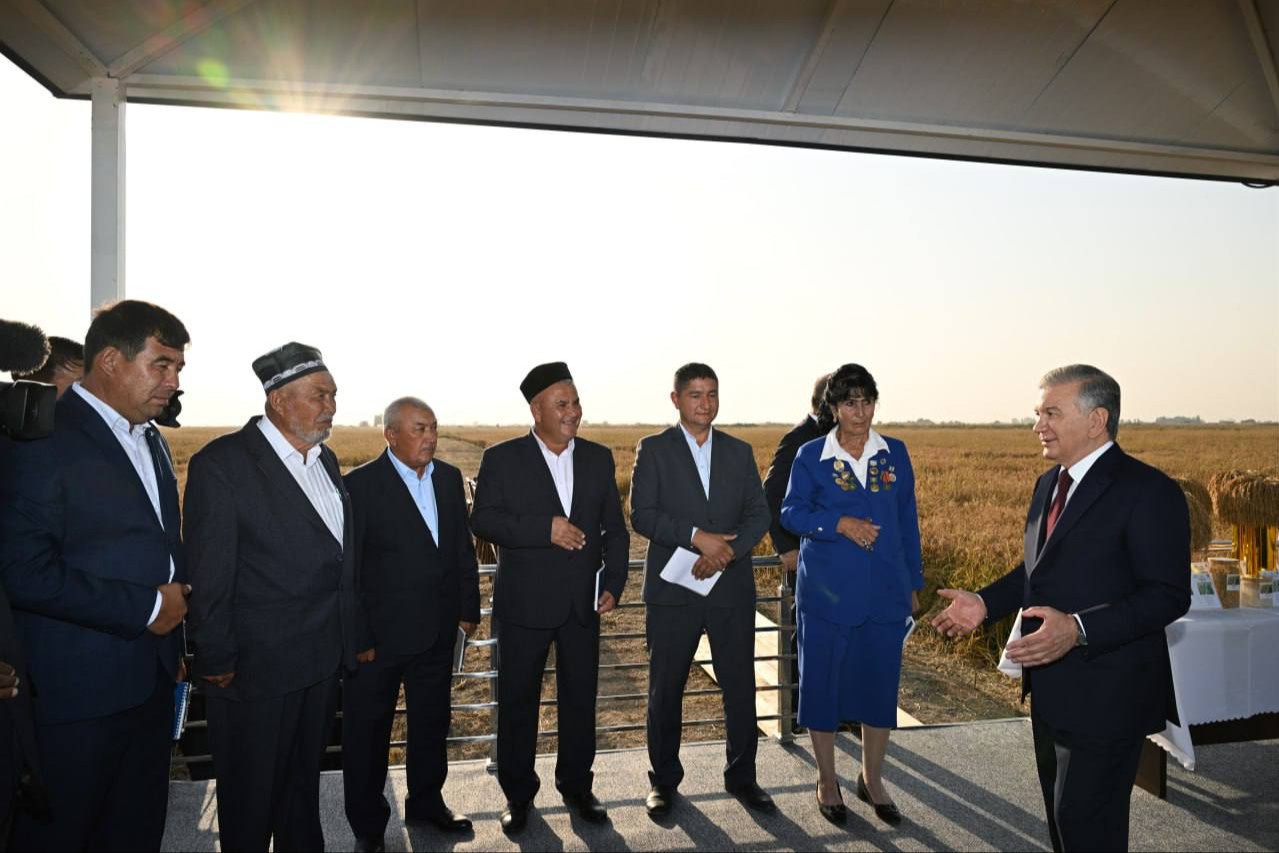
The President held a conversation with farmers and veterans of the agricultural sector. They noted that thanks to the introduction of high-yield varieties and modern farming technologies, labor productivity and profitability have increased.
“Today, in all areas, we rely on science, innovation, and advanced technologies. If we had not implemented market principles in agriculture and improved profitability, such a harvest would not have been possible. Now the climate is changing, water resources are diminishing, and farmers must adapt by shifting to drip irrigation and the rational use of water”, Shavkat Mirziyoyev emphasized.
It was noted that studying international experience and increasing labor productivity based on science and technology are essential.
Responsible officials were instructed to expand the cultivation of high-yield varieties, increase processing capacity, ensure the efficient use of water-saving technologies, and create new jobs.