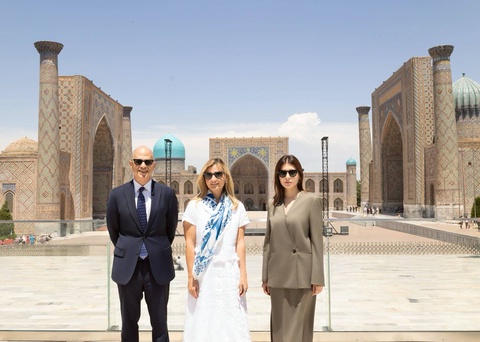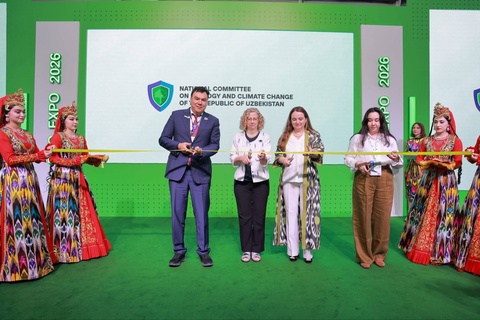

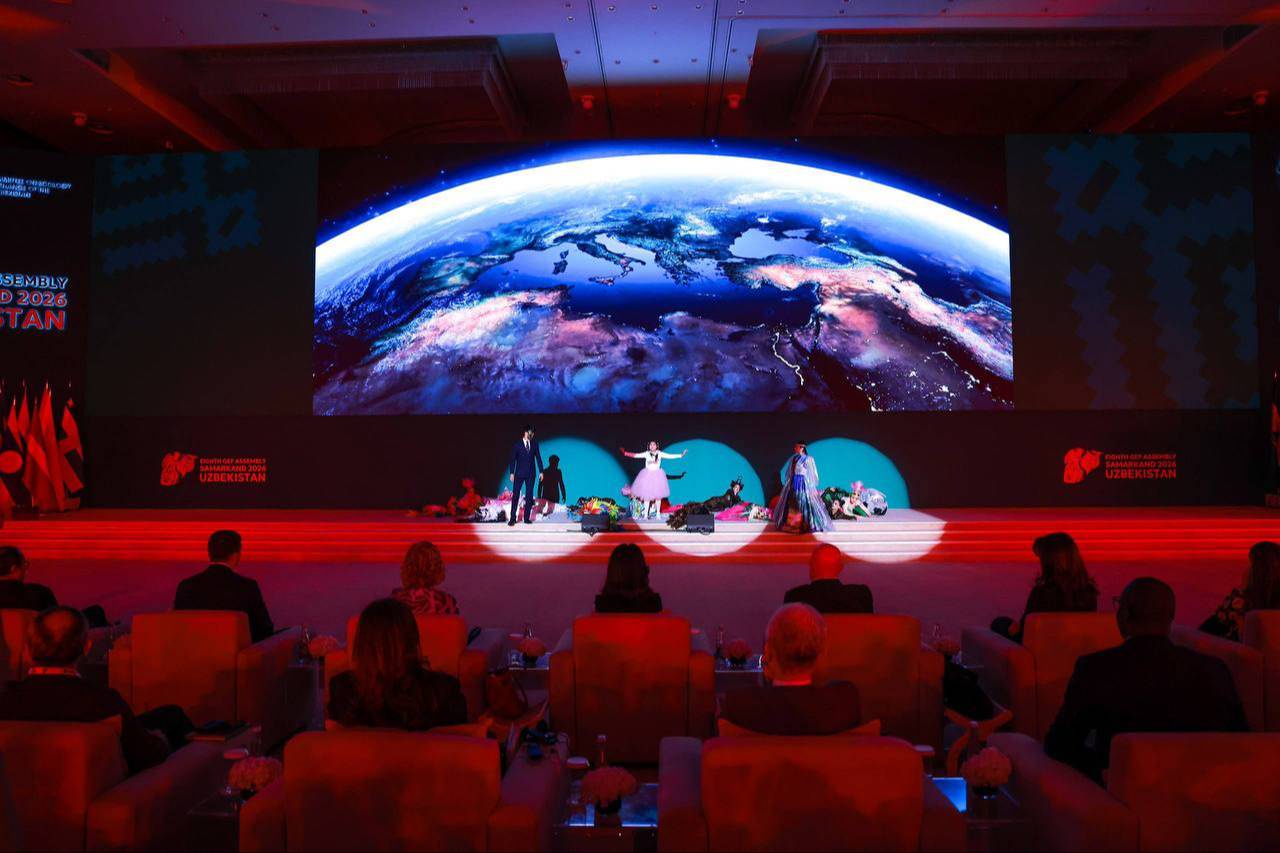
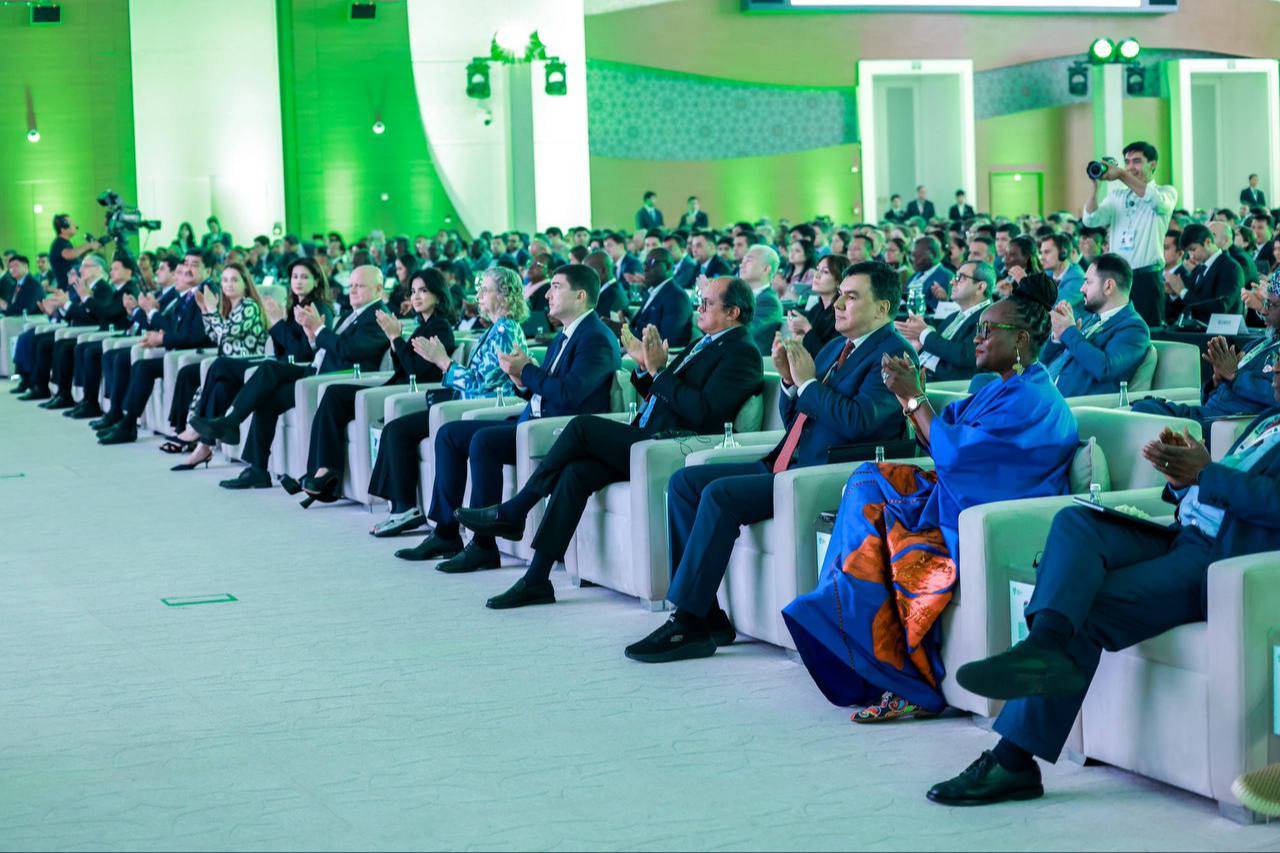
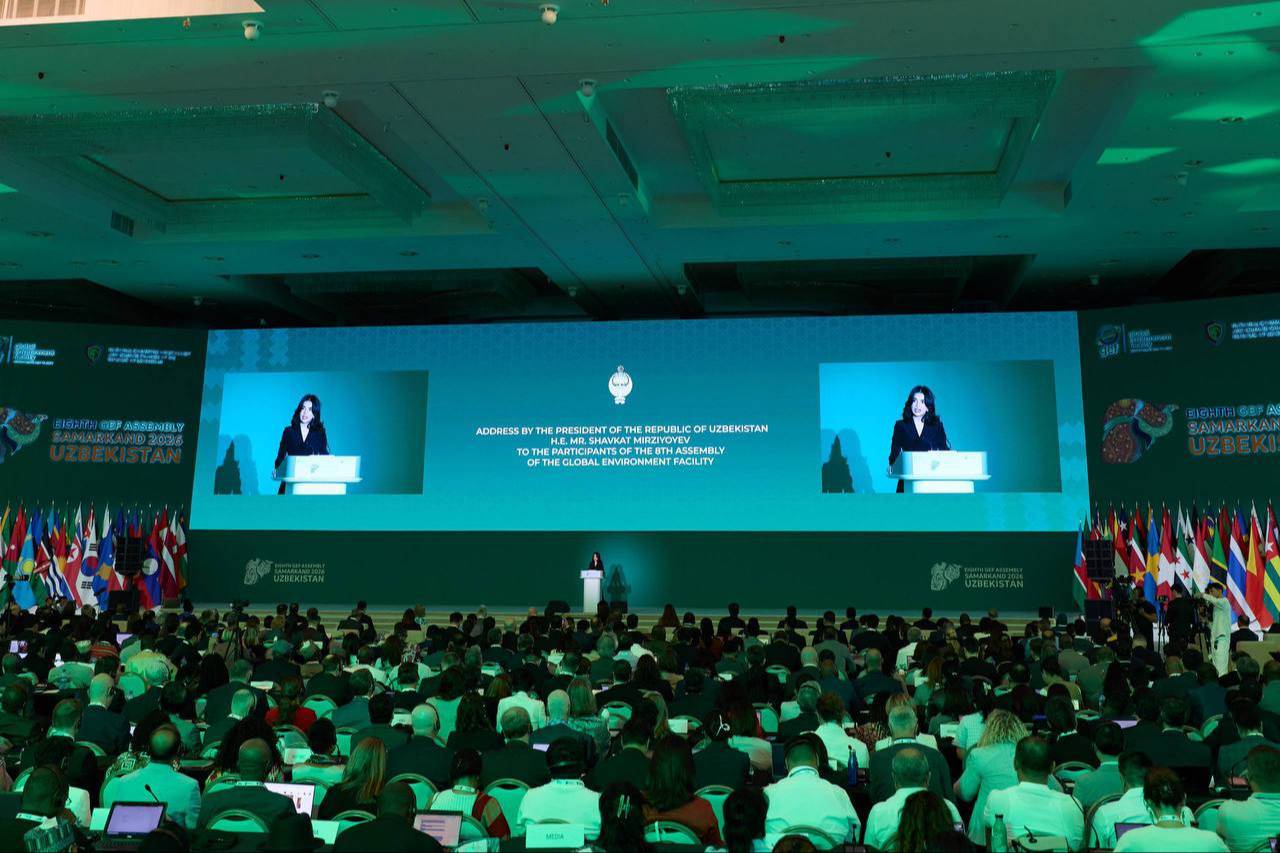
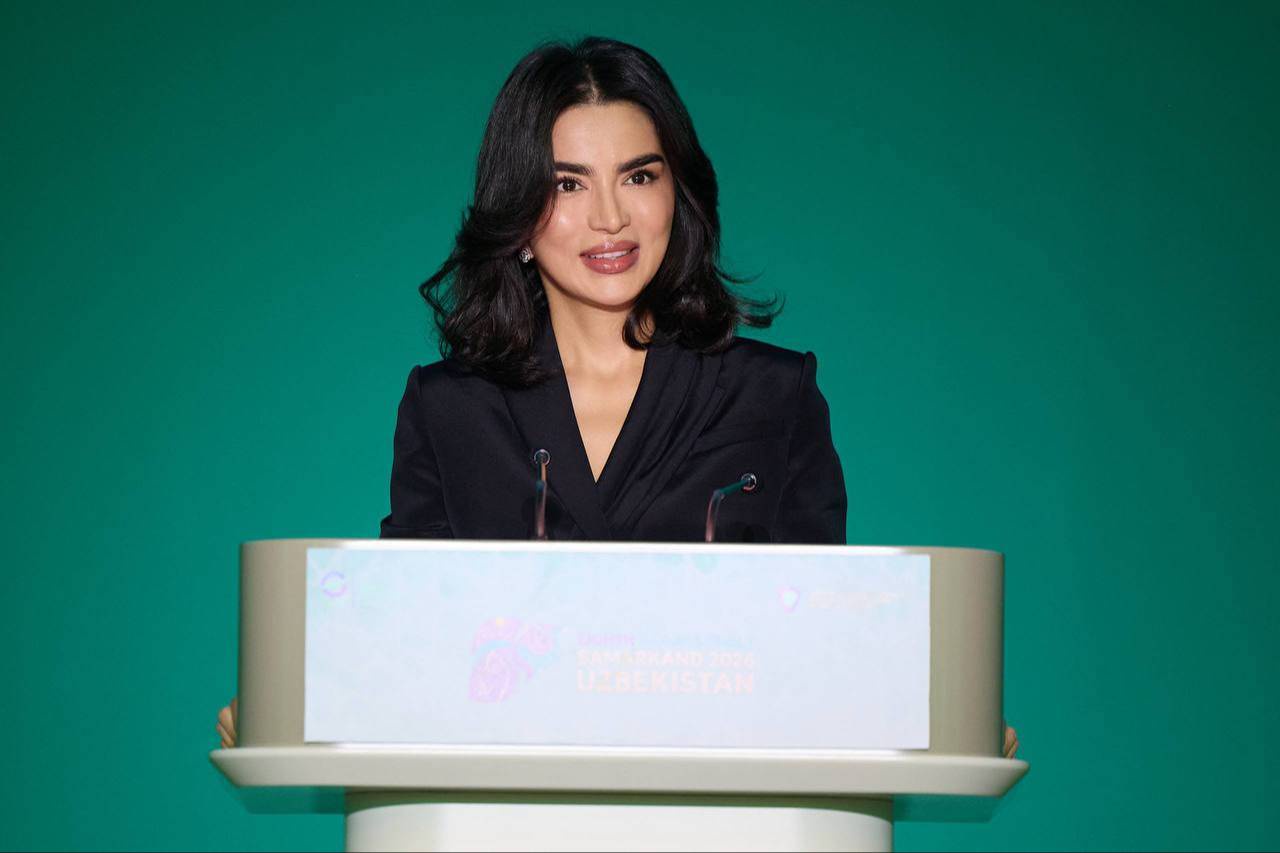
The opening ceremony was attended by the Head of the Presidential Administration of the Republic of Uzbekistan Saida Mirziyoyeva, who read the message of the President of the Republic of Uzbekistan Shavkat Mirziyoyev to the participants of the Assembly.
In his address, the Head of state emphasized the symbolism of holding the forum in Samarkand, a city that for centuries has connected East and West, various cultures and civilizations, science and practical knowledge. The President also noted the special importance of the Assembly, which is taking place on the eve of World Environment Day.
The message noted that today humanity is facing unprecedented environmental challenges - climate change, loss of biodiversity and environmental pollution. A special role in overcoming these problems is assigned to the Global Environment Facility, which over the years has mobilized over 170 billion US dollars for the implementation of environmental projects around the world.
Special attention was paid to environmental threats to Central Asia. The President noted that climate change, desertification, land degradation, melting glaciers and water scarcity remain key challenges for the region. According to the World Bank, about 37 million people in Central Asia already live-in conditions of acute water scarcity, and by 2050 this figure may reach 75 million.
The appeal emphasized that the New Uzbekistan considers environmental transformation as a new model of development. Five national projects are being implemented in the country, covering issues of atmospheric air protection, biodiversity, waste management, landscaping, environmental education and culture.
Among the key goals by 2030 are the expansion of the area of protected natural territories to 21 percent of the country's territory, the reduction of harmful emissions into the atmosphere by 10.5 percent, as well as the creation of arboretum and botanical gardens in all regions of the republic.
The development of waste recycling infrastructure was also noted. It is planned to launch two waste energy production plants in Uzbekistan this year, and nine more enterprises in the next two years. They are expected to recycle up to 5.5 million tons of waste per year and reduce greenhouse gas emissions by 1.1 million tons.
The President highlighted the development of environmental education and science. 10 scientific research institutes and centers, as well as 14 "green" technical schools are united on the basis of Green University. The country has begun the process of improving the environmental literacy of almost two million young people.
An important part of the speech was the topic of the restoration of the Aral Sea region. It was emphasized that Uzbekistan is implementing large-scale measures to transform the region into a space of renaissance, science and innovation, including the restoration of more than two million hectares of degraded land.
During the address, the President put forward a number of international initiatives. In particular, it was proposed to declare Samarkand the "Green Investment and Innovation Capital of Central Asia", to create the Ulugbek Research Institute for Sustainable Development together with the Columbia University Center for Sustainable Development, as well as the National Center for Climate Change and Hydrometeorology.
In addition, an initiative was announced to create an interstate consortium "Clean Air", an agreement on which had previously been reached with the President of Kazakhstan. The consortium will focus on the development of environmental monitoring, scientific research and the attraction of "green" financing.
The President also announced Uzbekistan's readiness to join the list of donor countries of the Global Environment Facility, emphasizing the country's intention to actively support joint regional environmental initiatives.
The Deputy Secretary-General of the United Nations and the Executive Director of the United Nations Environment Programme (UNEP) also addressed the opening ceremony Inger Andersen, Executive Secretary of the Basel, Rotterdam and Stockholm Conventions Rolf Payet and CEO and Director of Strategy and Operations of the GEF Claude Gascon.
The ceremony participants stressed the importance of strengthening international cooperation, combining scientific potential and expanding climate finance to effectively respond to global environmental challenges.
The Eighth GEF Assembly will continue its work in Samarkand with a series of plenary sessions, thematic forums and international events on sustainable development, climate change, biodiversity and the green economy.