
This is reported by Kazinform's own correspondent in Brussels.
Currently, the focus is on using more printed textbooks, developing handwriting skills, and reducing screen time in preschool education. Experts say that this increases the level of reading.
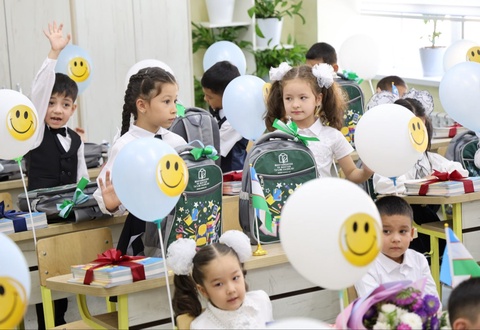
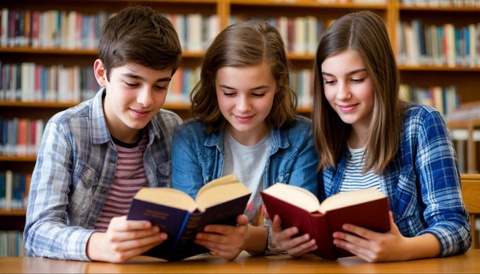
Some teachers say that students ask for more books and teaching materials on paper, claiming that this way they learn information faster and memorize it better than when using a laptop.
This is not a complete ban on the use of technology in the classroom, digital devices are still in use, but the government is spending millions to purchase printed textbooks and books for libraries, writes the BBC.
In the 2000s and 2010s, books were pushed out of Swedish school classrooms, giving way to laptops and iPads.
The idea was to prepare students for life in the digital world. But it seemed to have the opposite effect.
The literacy rate in Sweden, which in 2000 was one of the best in Europe, began to decline.
In 2012, after several years of declining results, PISA, a worldwide test measuring literacy in reading, mathematics and science among 15—year-olds, reached its lowest level.
Now, by popular demand, textbooks have returned to classrooms, and the situation is improving again.
A nationwide reading competition for ten-year-olds has started in the state, and the classes that have read the most books will receive prizes.
The Swedish government believes that digital educational tools should be introduced into the learning process only at an age when they contribute to, rather than hinder, student learning.
Physical textbooks are important for student learning and teacher work, but many schools still lack suitable textbooks. In 2023, the government introduced a new state subsidy designed for preschools, general education schools and similar types of schools. The state subsidy can be used to purchase textbooks and teaching aids for teachers. A total of SEK 685 million was allocated in 2023, 658 million in 2024, and 755 million in 2025. The government has allocated 555 million Swedish kronor for 2026 and the following years.
New curricula for compulsory schooling and related types of schools are planned to be implemented from 2028, and appropriate textbooks and teaching aids for teachers are needed to support learning based on the new programs. In this regard, the government has allocated 500 million Swedish kronor for a temporary increase in the state grant for the purchase of textbooks and teaching aids for teachers in 2028. inform.kz.