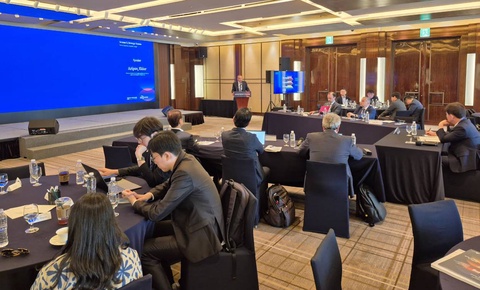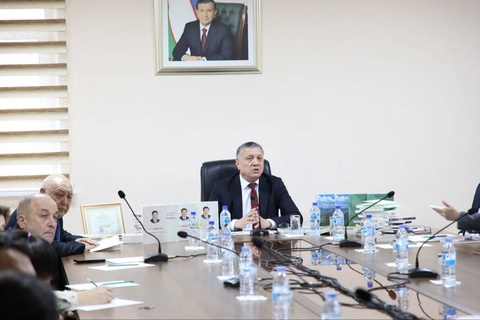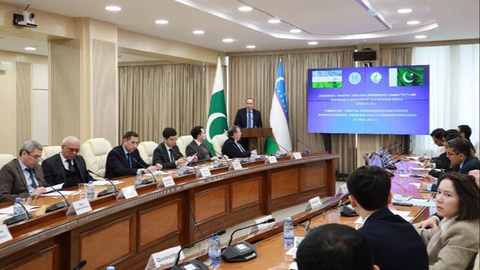

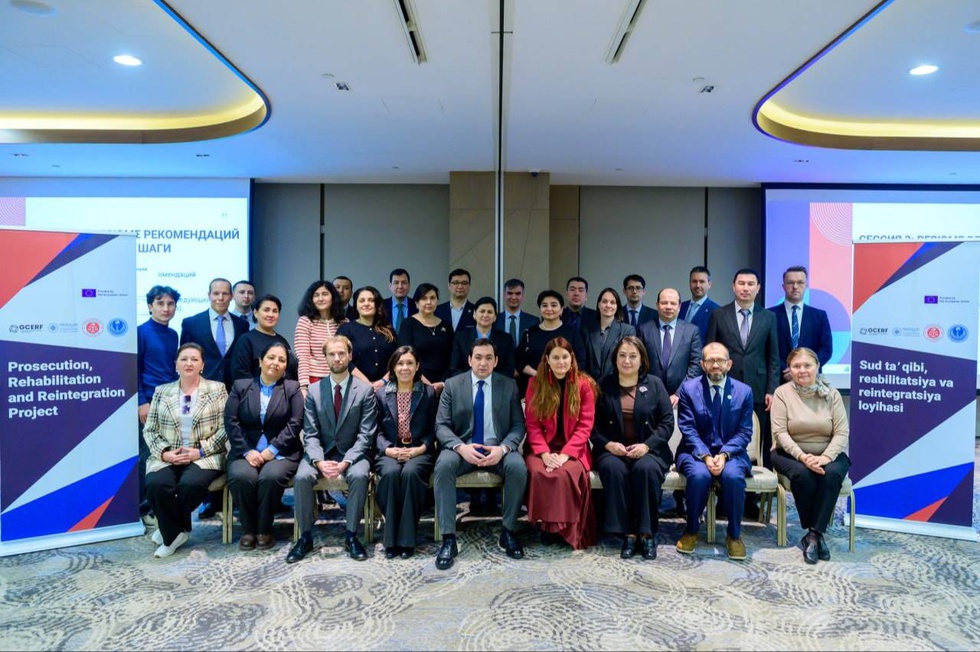
The event was organized by the Institute for Strategic and Interregional Studies under the President of the Republic of Uzbekistan (ISMI), co-organized by the Delegation of the European Union (EU), the Foundation for Global Engagement and Resilience (GCERF), the International Institute of Justice and the Rule of Law (IIJ), and the International Center of Excellence for Countering Violent Extremism (Hedayah).
The meeting brought together heads of relevant ministries and departments, representatives of international organizations, the expert community and civil society.
The purpose of the meeting is to coordinate efforts and develop coordinated approaches within the framework of the three-year PRR program funded by the European Union. The project is aimed at further improving the national system of work with returnees and strengthening sustainable mechanisms for their rehabilitation and reintegration.
A key feature of the initiative is the integration of expertise from three international institutions established under the auspices of the Global Counterterrorism Forum. GCERF ensures the involvement of civil society through grant support to local NGOs, Hedayah oversees strategic communications and educational programs, and IIJ promotes the improvement of legal mechanisms and institutional practices for working with returnees. This format of cooperation makes it possible to scale Uzbekistan's unique methodology and integrate international legal, social and communication standards.
Speaking at the meeting, ISMI Deputy Director Bakhtiyor Mustafayev stressed that international support testifies to the recognition by the world community of the results achieved by Uzbekistan. "Our country has proven in practice that repatriation is not a threat, but an investment in stability," the expert noted. According to him, the built-up model combines a humanitarian approach and long-term security objectives.
The Program Manager of the EU Delegation to Uzbekistan, Yana Kurpica, stated that the project aims to strengthen national programs for the rehabilitation and reintegration of returnees and strengthen the country's institutional capacity.
Karina Timshina, Regional Coordinator of the UN Counter-Terrorism Office for Central Asia, highlighted the activities of the Regional Expert Council on Rehabilitation and Reintegration. According to her, the Council, created on the initiative of the President of the Republic of Uzbekistan, significantly activates regional efforts in this area.
The beginning of the active phase of the PRR project was also supported by the US Embassy, the Office of the OSCE Project Coordinator, UNICEF and the German Society for International Cooperation (GIZ) in Uzbekistan.
At the end of the meeting, representatives of GCERF, Hedayah and IIJ announced a detailed project implementation plan for 2026. The meeting participants formed a package of practical recommendations aimed at ensuring effective and coordinated implementation of the planned activities.
In general, holding the first meeting of the Council in Uzbekistan was an important step in institutionalizing partnership and confirming the country's commitment to a systematic and integrated approach in the field of rehabilitation and reintegration of repatriates.