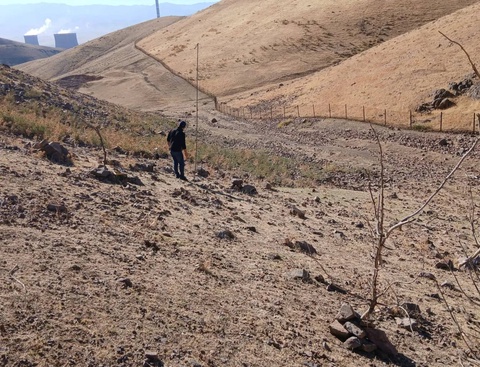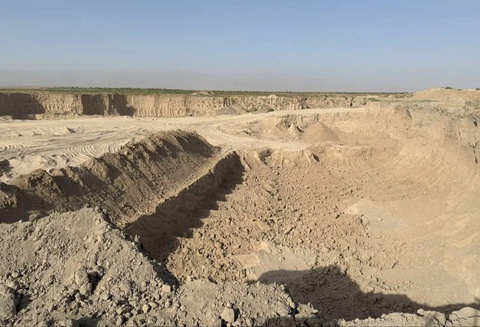

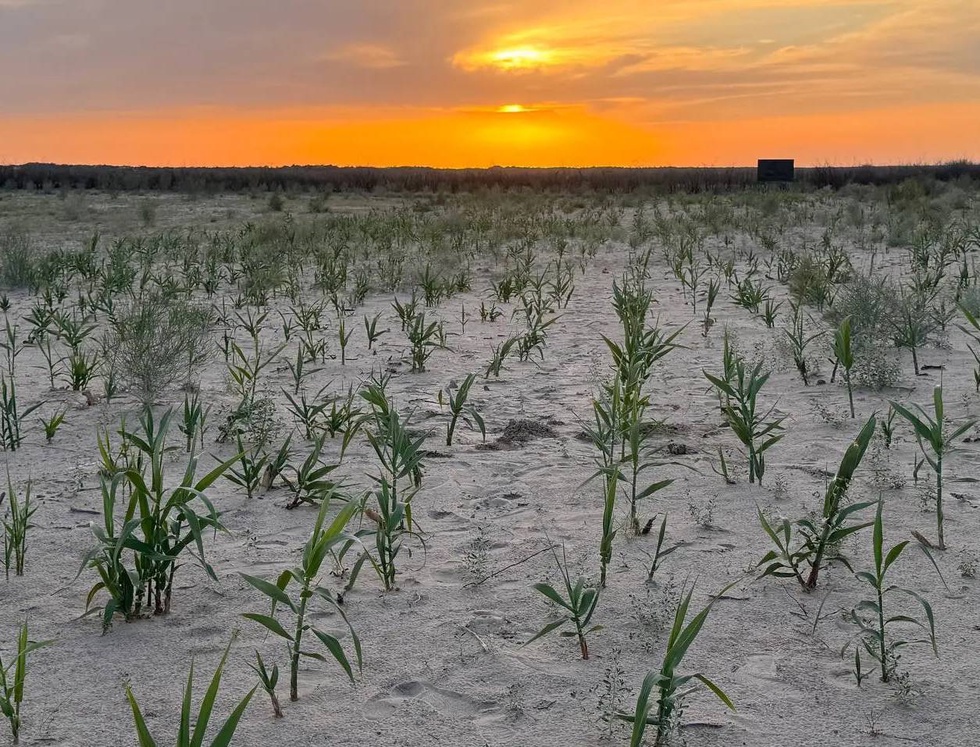
The main goal of the project is to identify the plant species that are most resistant to high salinity conditions and are capable of adapting to the extreme conditions prevailing on the former seabed.
One of the promising plant species that showed high survival rate was Arundo donax, a giant reed grass known for its ability to tolerate saline conditions, despite its natural craving for moist soils. During the field work, soil excavations were carried out, which showed that the groundwater level in the studied area lies at a depth of about 2 meters. It is noteworthy that the roots of Arundo donax reach this depth within the first year, which allows the plant to effectively use groundwater for further growth and sustainable development.
"A team of researchers has developed a unique technology to increase the survival rate of Arundo donax in saline conditions. The essence of the method consists in planting with root scions, which are taken from a depth of at least one meter from the mother plantation on lands similar in salinity to the drained bottom of the Aral Sea. These offspring were brought from Urgench and Karakalpakstan. The results exceeded expectations: the survival rate of plants is at least 90%," said Z.Novitsky.
According to the scientist, this is the approach to plant adaptation that will be used in the future. In Arundo donax, the root system demonstrates not only vertical growth (up to 1 meter or more in the first year), but also a significant horizontal spread - up to 2 meters, which helps to stabilize the soil and prevent its further degradation.
The conducted tests open up new possibilities for the biological rehabilitation of the drained bottom of the Aral Sea. The technique can become the basis for large-scale landscaping and combating dust storms, as well as for restoring the region's ecosystems in the face of climate change and environmental degradation.