
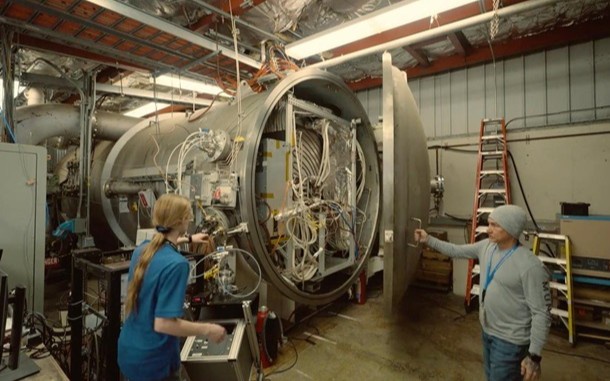
Tested at the Jet Propulsion Laboratory in California, this development could be utilized for manned flights to Mars and deep space missions. The new engine operates on lithium metal vapor—a technology studied since the 1960s, though significant breakthroughs in its practical application have only recently been achieved. During the testing process, the system underwent five startup cycles: the central tungsten electrode heated to temperatures exceeding 2800°C, producing a brilliant white light.
The system's power reached 120 kilowatts—approximately 25 times more than the engines of the Psyche spacecraft, which are currently considered the most powerful electric engines used in NASA missions, according to korrespondent.net.
Laboratory representatives stated that preparations for these tests took several years. Engineers not only confirmed the viability of the technology but also achieved the planned power output, opening possibilities for further scaling. If successfully developed, this technology could significantly reduce interplanetary travel time and enhance the efficiency of both manned and robotic missions within the solar system.