
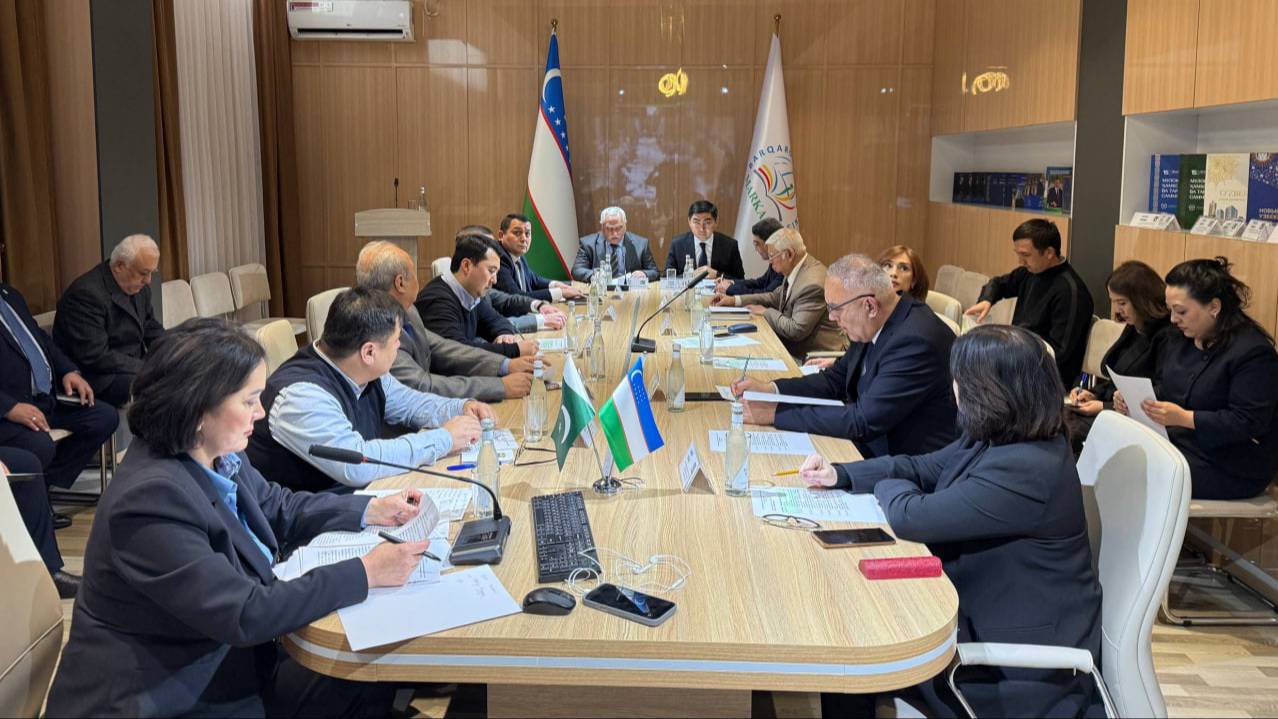
In recent years, Uzbek-Pakistani relations have noticeably intensified and acquired a more substantive character. Regular contacts at high and medium levels, the expansion of political consultations and the growing interest of the business community indicate a mutual desire to take cooperation between the two countries beyond formal statements. For example, the fact that the trade turnover between Uzbekistan and Pakistan increased by 16 percent in 2025 confirms the above.
A characteristic feature of the current stage is the desire to fill the political dialogue with real content. Economics, transport connectivity, humanitarian exchanges, and educational programs are more often seen as interrelated elements of a common agenda. This approach allows us to talk about the transition from a symbolic partnership to a more pragmatic and result-oriented model of cooperation.
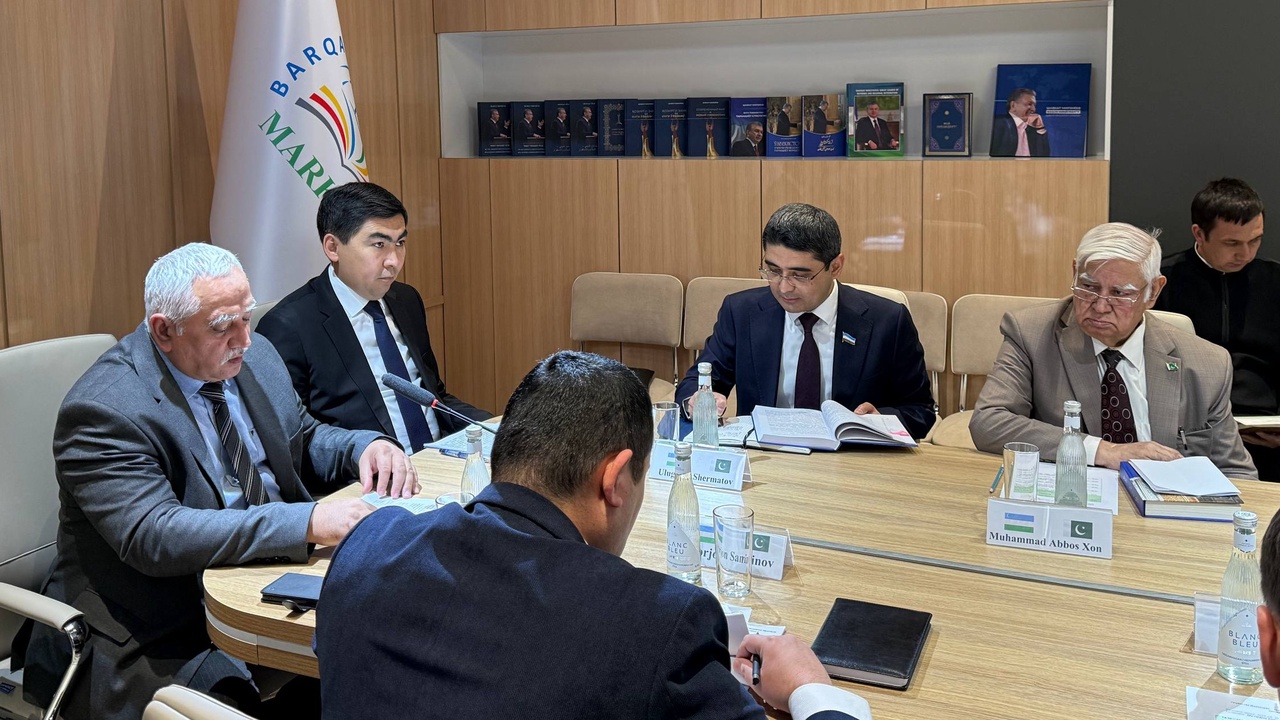
It was against this background that the expert discussions in Tashkent were perceived as part of a more concrete process of rapprochement. One of the key factors determining the stability of the Uzbek-Pakistani dialogue remains the deep historical and value closeness of the two peoples. During the expert discussion, the Pakistani participants repeatedly stressed that relations between Uzbekistan and Pakistan are based on both modern political interests and a common civilizational heritage that has been formed over the centuries.
The invocation of the names of Imam Bukhari, Imam Termizi, Bahauddin Naqshbandi and other prominent thinkers of the Islamic world sounded like a reminder that science, spirituality and the pursuit of knowledge have historically connected the regions of Central and South Asia and continue to serve as a solid foundation for their interaction. This creates a significant potential for bringing bilateral cooperation in the cultural and humanitarian sphere to a qualitatively new level, as well as for the practical implementation of the idea of the head of our state on the development of pilgrimage tourism.
Pakistani representatives noted that Uzbekistan is perceived by them as a country close in spirit with a rich culture, similar traditions and a respectful attitude towards religious and historical heritage.
It was emphasized that Uzbekistan's appeal to its own history and spiritual roots in the context of modern reforms provokes a lively response in Pakistan. Experts attributed this to the fact that the idea of a Third Renaissance based on knowledge, moral values and respect for human beings is close and understandable to the Pakistani society. That is why the dialogue between the two countries has now gone beyond the official formats and is filled with humanitarian and intellectual content.
The assessment of the reforms carried out in Uzbekistan took a central place in the speeches of foreign experts. Pakistani experts mentioned the words of President of the Islamic Republic of Pakistan Asif Ali Zardari that Uzbekistan is achieving significant results in implementing the model of the Third Renaissance, emphasizing that this is not only a step forward in development, but also a source of inspiration for neighboring and friendly countries, as well as an important experience for the whole world.
Pakistani writer Muhammad Abbas Khan stated: "In Pakistan, the reforms carried out by Uzbek President Shavkat Mirziyoyev and their results are being studied with great interest. After all, they are of particular importance in ensuring the sustainable development not only of Uzbekistan, but also of Pakistani society, Central and South Asia as a whole, as well as on a global scale. In particular, the idea of the Third Renaissance of the President of Uzbekistan is based on a strategic approach aimed at the development of education, science, culture and enlightenment. This approach is a practical expression of a systemic policy aimed at advancing society towards progress through intellectual growth."
Special emphasis is placed on the fact that the reformist policy of President of Uzbekistan Shavkat Mirziyoyev is based on a combination of modern management and spiritual and moral guidelines. Foreign experts emphasized that the appeal to the intellectual and cultural heritage of the region does not contradict modernization, but, on the contrary, has given it stability and internal logic. They considered this approach as one of the main competitive advantages of Uzbekistan.
External observers also drew attention to the increased openness of the country. Uzbekistan is becoming more actively involved in international processes, expanding its dialogue with partners, and creating a positive image on the world stage. According to experts, it is this openness that allows for an objective assessment of reforms and enhances confidence in the course being pursued.
The discussion of Uzbek-Pakistani relations in Tashkent showed that the accumulated political dialogue is increasingly moving into the plane of practical interaction. The experts stated that mutual trust and a similar understanding of strategic objectives create the basis for specific joint initiatives that go beyond traditional forms of cooperation.
Humanitarian cooperation was identified as one of the priority areas. Education, science, and academic exchange are seen as long-term investments in the sustainability of bilateral relations. The Pakistani participants noted the growing interest in Uzbekistan's experience in the field of educational reforms, as well as the potential for expanding contacts between universities, research centers and expert communities. An important indicator is that in 2025 alone, about 2,000 Pakistani students came to Uzbekistan for higher education. This represents almost five percent of the total number of international students arriving in our country. This indicator also indicates that there are untapped opportunities in this area.
Approval was also expressed for the achievements of Uzbek youth. For example, in 2025, the participation of Uzbek schoolchildren in international subject Olympiads brought 40 gold, 78 silver and 92 bronze (210 medals in total) at 29 international subject Olympiads.
Special attention is paid to the issues of economics and sustainable development. According to Musaddiq Hussain, Dean of the Riphah International University of Pakistan: "Practical measures to support the private sector and entrepreneurship, and improve the investment climate in the country make it an attractive platform for foreign partners, including Pakistani investors. I am sure this will contribute to the rapid development of economic relations between Pakistan and Uzbekistan, the strategic goal of which is to increase mutual trade turnover to two billion dollars."
Taken together, these statements indicate that Uzbek-Pakistani relations are gradually becoming more concrete. The expert community considers this process as a natural stage in the evolution of the bilateral dialogue, in which ideas and values are continued in practical forms of cooperation.
The visit of the President of the Republic of Uzbekistan Shavkat Mirziyoyev to Pakistan is seen as a logical continuation of this trend. It is intended to give an additional impetus to the political dialogue and consolidate the transition to closer and more effective cooperation. The expert community associates the current visit with the further deepening of cultural, humanitarian and socio-economic ties between the two countries.
The international interest in Uzbek reforms and the very idea of the Third Renaissance confirms that Uzbekistan is now perceived as an active and responsible participant in regional and global dialogue. The country's experience is increasingly becoming the subject of reflection abroad, and relations with partners, including Pakistan, are being filled with new content focused on long-term development and mutual benefit.
Nodir Safarov.
Expert of the Center for Sustainable Development.