
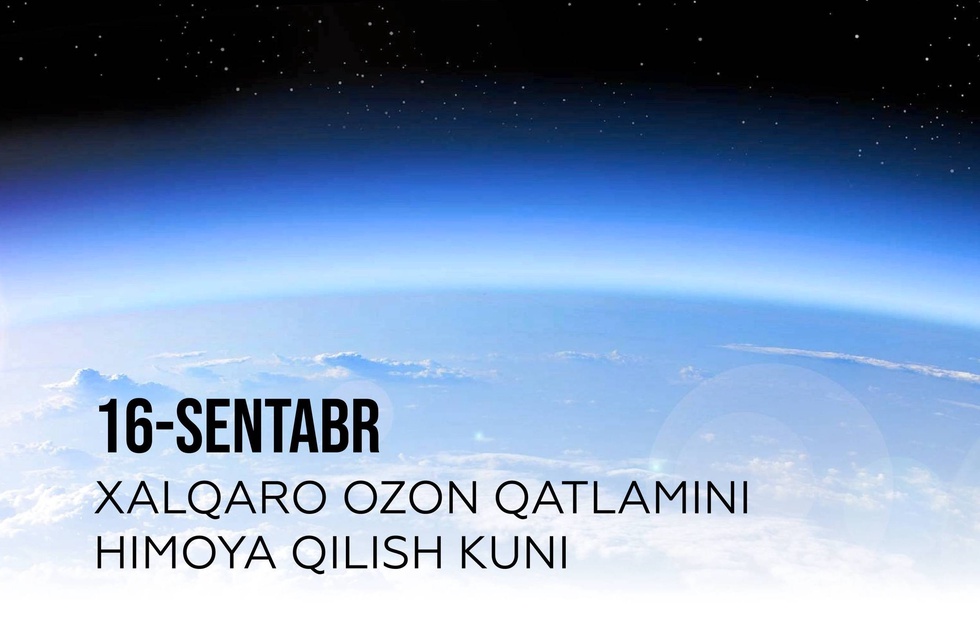
Measures aimed at preserving and protecting the ozone layer are being implemented all over the world, including in Uzbekistan. In particular, the Vienna Convention for the Protection of the Ozone Layer was adopted in 1985, and the Montreal Protocol was adopted on September 16, 1987. Over the following years, this protocol has been amended and supplemented five times.
Today, Uzbekistan is a party to four amendments: The London (1990), Copenhagen (1992), Montreal (1997) and Beijing (1999). In addition, the issue of ratification of the latest Kigali Amendment, adopted in 2016 in Rwanda, is currently being considered.
In order to fulfill international obligations, on January 9, 2018, the Cabinet of Ministers of Uzbekistan adopted Resolution No. 17 "On measures to further improve the regulation of imports of ozone-depleting substances and products containing them into the Republic of Uzbekistan." According to the document, the import and export of such substances and products are subject to state regulation.
Thus, according to the approved procedure, 5,038 applications for the import of ozone-depleting substances or products containing them were considered. According to the results of the inspections, 45 permits, 4964 conclusions were issued and 29 refusals were issued.
In the first six months of 2025 alone, 2,581 applications for the import of products containing ozone-depleting substances were received. As a result, 25 permits were issued, 2,550 opinions were issued, and 6 refusals were issued.
Within the framework of the State Program for the implementation of the Strategy "Uzbekistan - 2030" and in the "Year of Environmental Protection and Green Economy", a study is being conducted on the feasibility of joining the Kigali Amendment to the Montreal Protocol.
For reference: the average thickness of the ozone layer is only about 3 millimeters. Ozone (O₃) molecules, located at an altitude of 10 to 50 kilometers above the Earth's surface, play a key role by trapping harmful ultraviolet radiation from the Sun. The main threat to it is represented by chlorofluorocarbons, halons, methyl bromide and a number of other chemical compounds. Once in the atmosphere, they destroy ozone molecules, which leads to serious environmental and medical consequences, from the growth of cancer in humans to negative effects on flora and fauna.