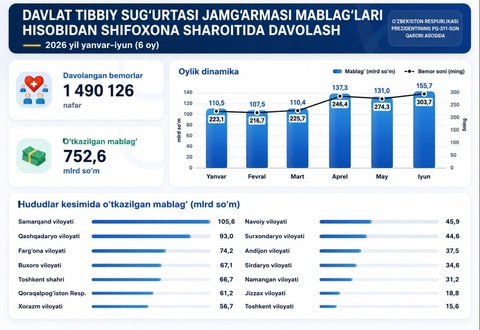

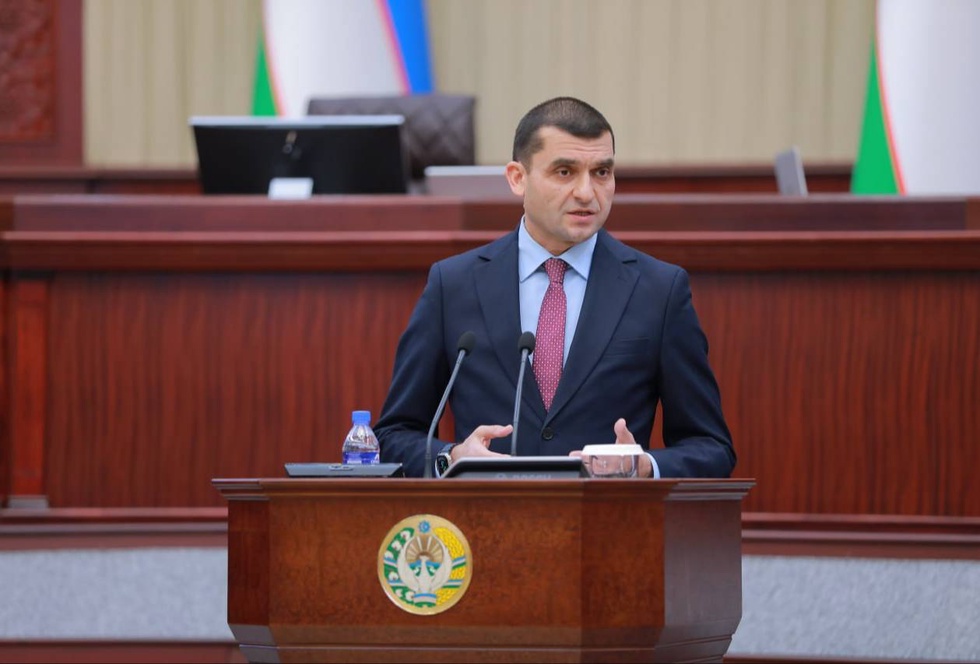
It was noted that large-scale reforms are continuing in the healthcare sector: medical prevention, maternal and child health, the development of primary health care, specialized and emergency medical care, the introduction of state medical insurance, digitalization and improvement of personnel policy.
In particular, this year alone, 3 laws, 3 decrees and 2 presidential resolutions, as well as 3 resolutions of the Cabinet of Ministers, have been adopted in the sphere. In accordance with the Presidential Decree "On measures to consistently continue reforming the healthcare sector by improving this system and principles of providing medical services to the population," a new model of the healthcare system based on international experience has been introduced in 15 districts and cities.
The list of diseases that are treated at the expense of the budget has been approved, and the procedure for providing medicines for orphan diseases has been developed. The coverage of the population with preventive examinations has been expanded in the primary health care system: more than 12 million citizens aged 18-40 have undergone occupational examinations, 7 million people over the age of 40 have been screened for cardiovascular diseases and diabetes, over 800 thousand for tuberculosis.
More than 70,000 patients were examined in specialized medical centers, and over 17,000 surgical operations were performed. 242 new diagnostic and treatment methods have been introduced into the practice of institutions, 7 new diagnostic and 10 therapeutic methods have been introduced in the branches of the centers.
According to the minister, this year the ambulance service has received more than 13 million calls, and for the first time, special ambulance teams based on compact electric vehicles have been organized. The service's fleet has been updated with 1,000 modern vehicles.
As a result of the increase in the number of ambulance crews from 1,648 to 2,865, the cost of medicines increased 16-fold, and the arrival time for a call decreased 3-fold. A new disability identification system has been introduced: documents are sent to the medical and social expert commission exclusively through family doctors.
During the meeting, the deputies noted the presence of some shortcomings in the regions, as well as appeals from citizens on these issues. It was emphasized that the potential in the fields of maternal and child health, primary health care, specialized and emergency medical care, as well as state medical insurance is not fully utilized.
The deputies made suggestions and recommendations aimed at improving public health, developing primary health care and improving specialized and emergency medical care.
The Minister's information was taken into account, and it was decided to ensure effective parliamentary control over this issue.