
This was reported by scientists from the Laboratory of Solar Astronomy at the Institute of Space Research of the Russian Academy of Sciences and the Institute of Solar-Terrestrial Physics of the Siberian Branch of the Russian Academy of Sciences.
Today, the K-index will rise to 7 points out of 9, which astrophysicists classify as a G3 class magnetic storm - this is one of the strongest such phenomena of the year. The last time such geoattacks were recorded was at the very beginning of summer.
"Officially, according to the global network of stations, magnetic storms of a planetary scale have begun on Earth," the astrophysicists wrote on Monday night. "The geomagnetic index will almost certainly grow in the coming hours, as data on G2-G3 storms are already being received from some stations."
With such impacts from space, both people and equipment suffer. During G3-class magnetic storms, signal reception problems are possible, and meteopaths may feel worse. Most often, they complain of headaches, aching joints, insomnia, spikes in blood pressure, and general malaise.
According to the forecasts of the staff of the Laboratory of solar Astronomy, the K-index will fluctuate between 5-7 points all day. The magnetosphere will calm down only on September 3. By Wednesday evening, the strength of the geoattacks will decrease to 2 points.
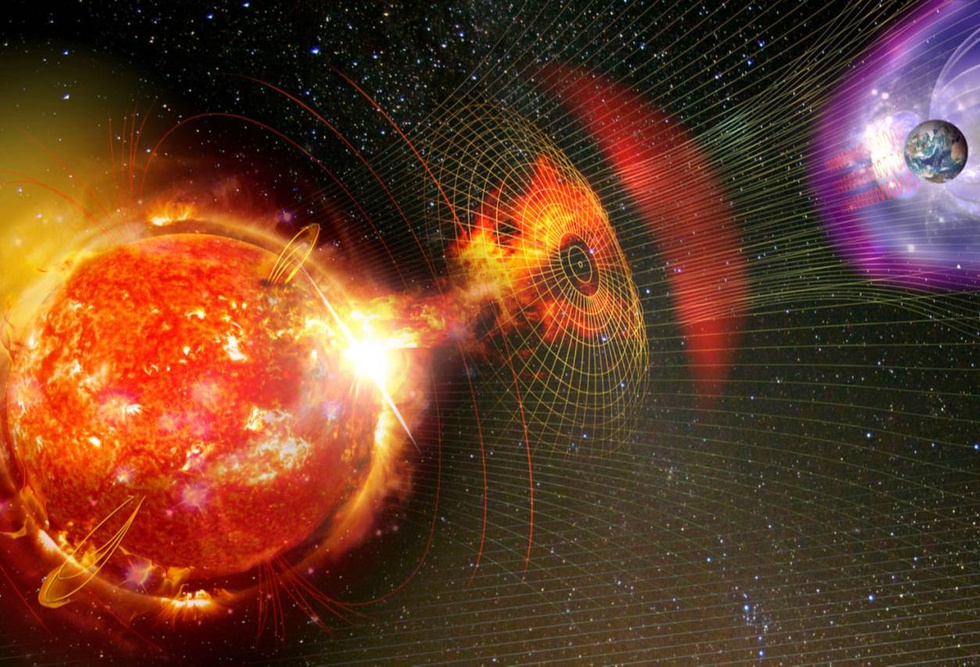
The current magnetic storm is related to the M2.76 solar flare that occurred in late summer. The plasma cloud came to Earth after it.
"The main danger currently is repeated emissions, which are very likely given the high estimates of the total reserves of solar flare energy," the experts added. "This is exactly the scenario that developed in May 2024, when the highest-level magnetic storms that occurred for the first time in 20 years were caused not by a single large explosion, but by a series of consecutive medium-sized mass emissions."