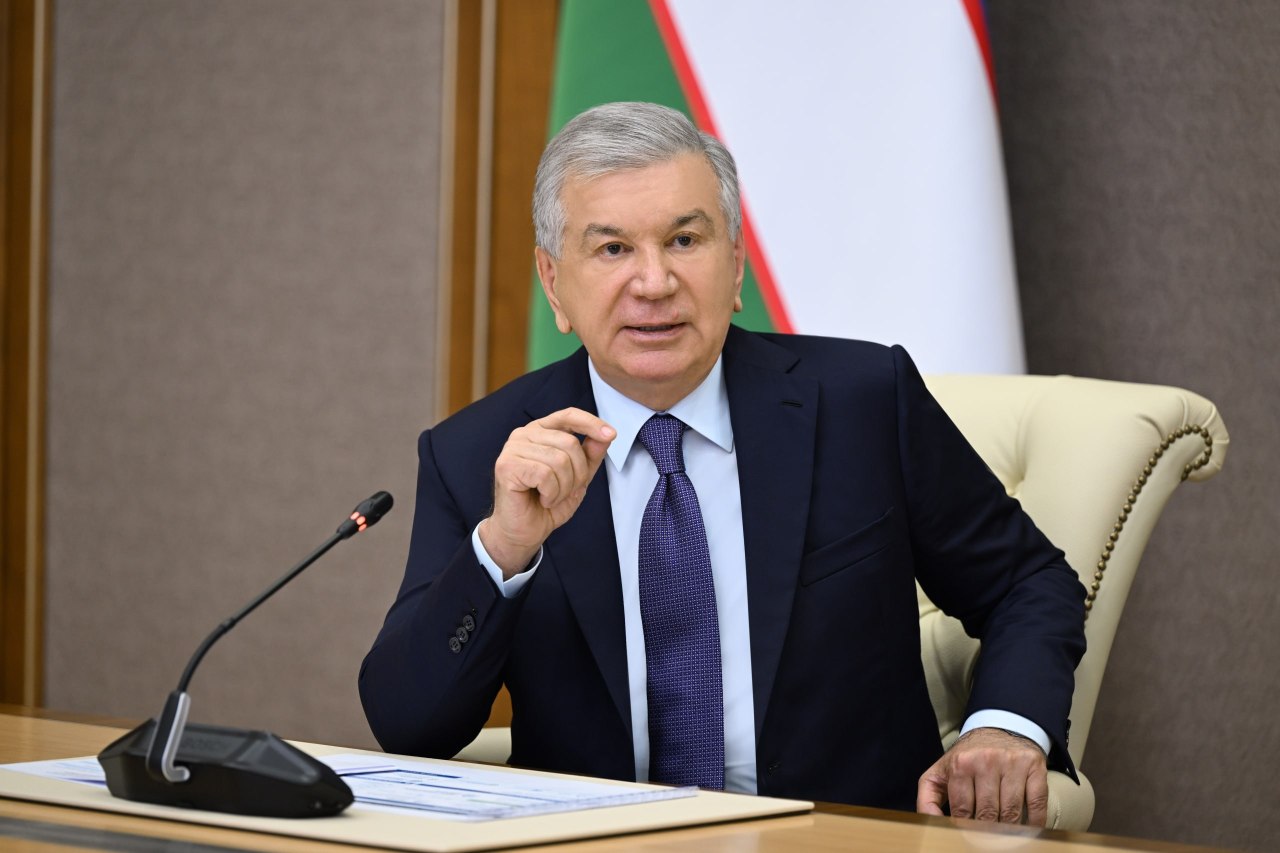

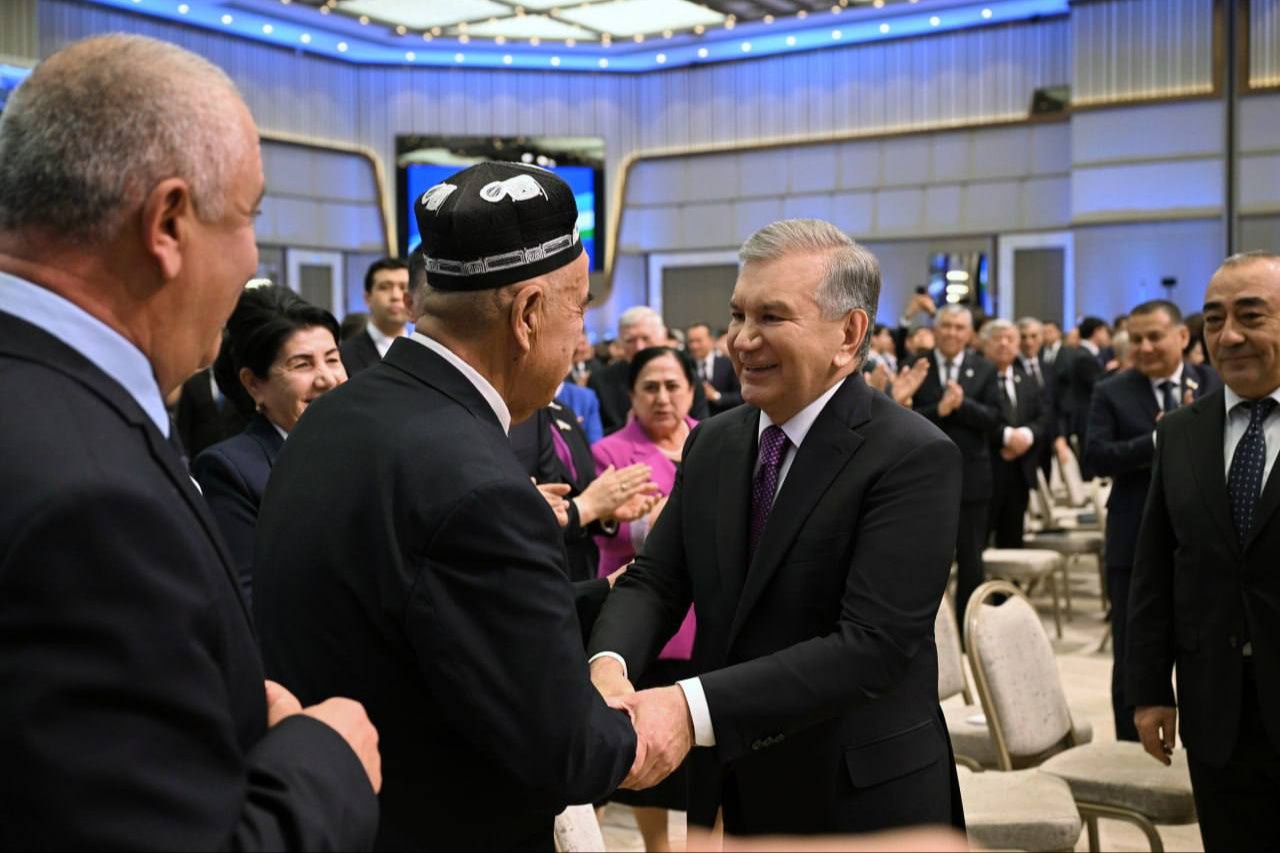
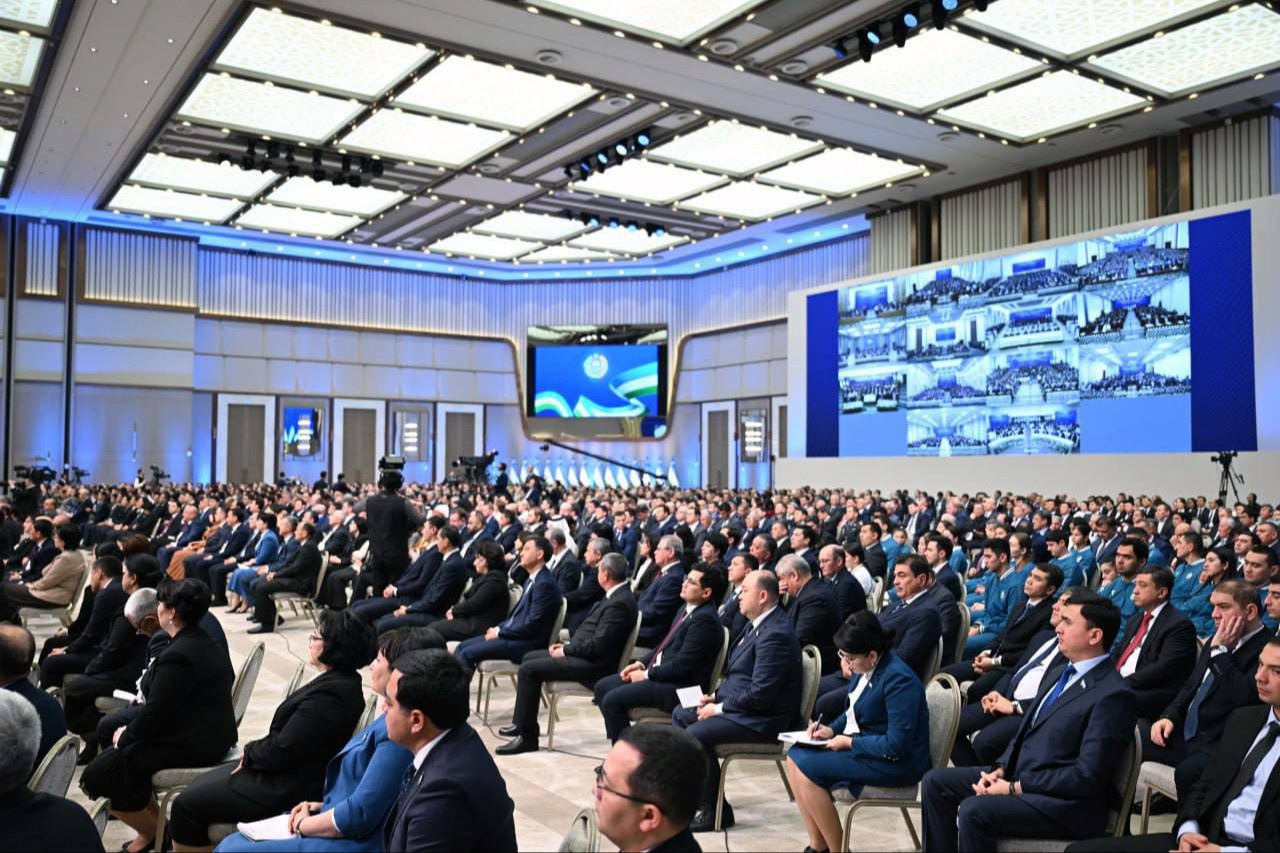
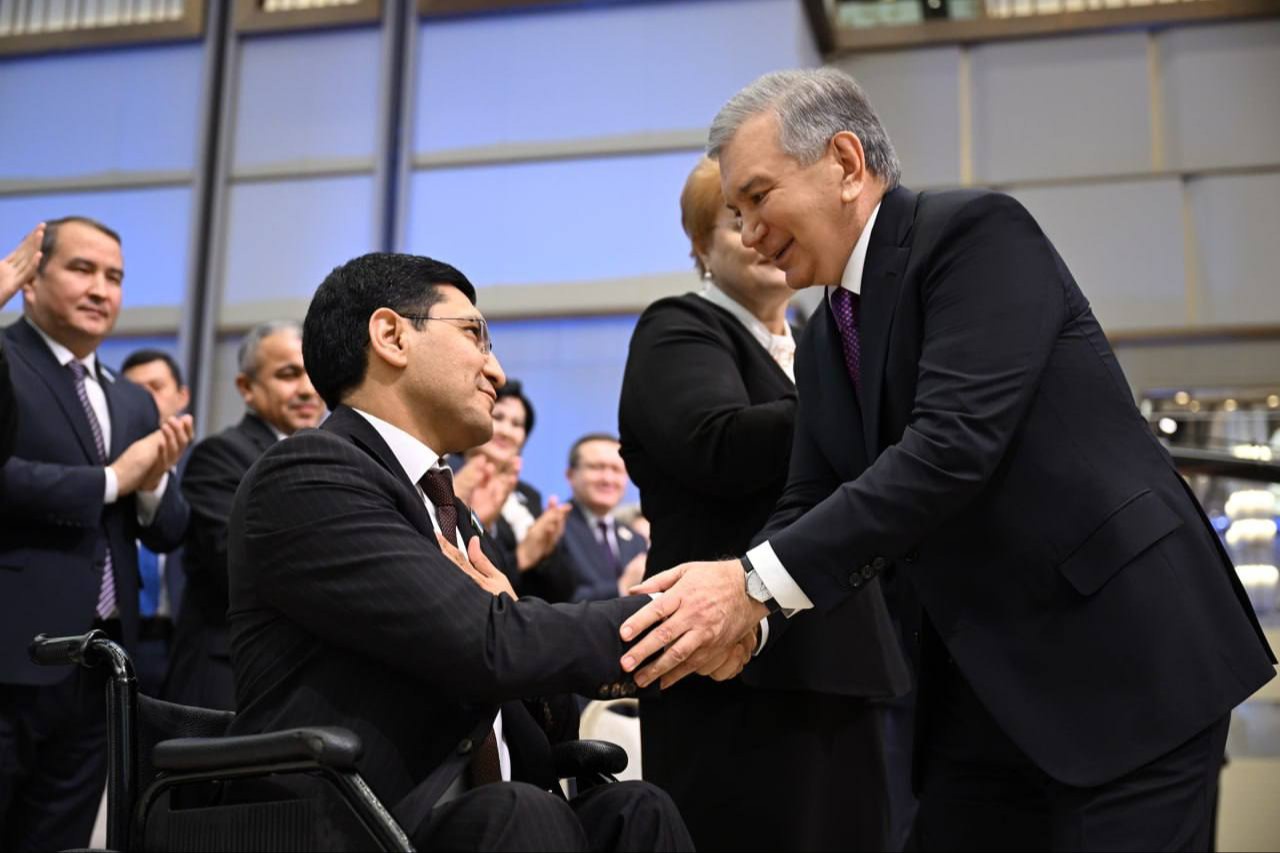
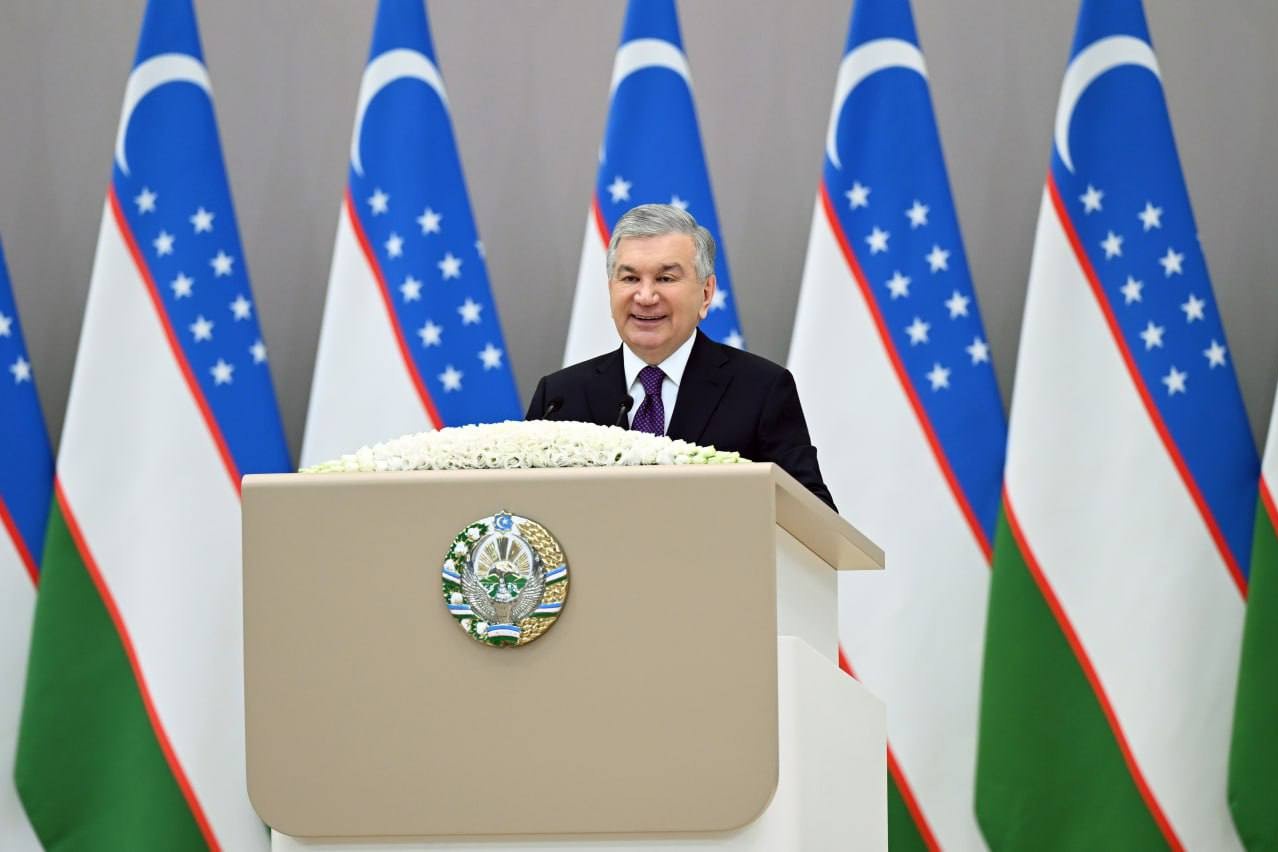
“Over the past nine years, together with you and together with our people, we have come a long way in development. Our economy has acquired a new quality, we have expanded market relations, strengthened social protection, and reinforced the rule of law. Most importantly, the results of the reforms are now being felt in the daily lives of every mahalla, every family, and every individual”, the Head of State said at the beginning of his address.
Despite the challenges, democratic reforms were implemented consistently and resolutely. Thanks to the support of the people and the energy of youth, the strengthening of the role of the mahalla in the life of society, changes in people’s consciousness and worldview, greater unity and initiative, the courageous work of entrepreneurs, dehkans, and farmers, as well as a friendly foreign policy based on mutually beneficial cooperation, significant progress was achieved across all sectors in 2025.
For the first time in the country’s history, gross domestic product exceeded $145 billion. This year, exports grew 23 percent to $33.4 billion. It was particularly emphasized that gold and foreign exchange reserves exceeded $60 billion for the first time.
The volume of foreign investment attracted into the economy reached $43.1 billion. The share of investment in GDP is 31.9%. Leading international rating agencies upgraded the country’s sovereign rating from “BB–” to “BB”.
Thanks to transformative energy-sector reforms, electricity generation increased to 85 billion kilowatt-hours.
This year, for the first time, 715 thousand residents in 188 mahallas were provided with clean drinking water, while water supply improved for nearly 2 million 300 thousand more people.
This year, 5 million people gained access to sustainable income sources, and the unemployment rate declined from 5.5 percent to 4.9 percent. About 1.5 million citizens in need were lifted out of poverty, and for the first time, 1,435 mahallas became territories “free from poverty.”
A total of 168 thousand children from low-income families were admitted to state kindergartens on preferential terms. This year, an inclusive education system was introduced in 208 kindergartens.
The country’s poverty rate decreased from 8.9 percent at the beginning of the year to 5.8 percent.
“When we began this work, one-third of the population was living at the poverty line. By launching a fundamentally new social protection system through more than 100 types of services – loans, subsidies, and compensations – and transferring them directly to the ‘group of seven’ in the mahallas, we achieved results whereby more than 8.5 million people were lifted out of poverty and unemployment was reduced by half”.
“As a result, we have already achieved this year the goal of halving poverty by the end of 2026”, the President said.
It was noted that talented young people, achieving significant success in education, science, culture, the arts, sports, and other fields, are making a worthy contribution to the development of New Uzbekistan.
In recent years, the country has become an international platform for discussing global issues.
In particular, this year Uzbekistan hosted the 150th Assembly of the Inter-Parliamentary Union, a session of the UNESCO General Conference, the Central Asia – European Union Summit, and the International Climate Forum.
It was also noted that in March, at a meeting of the leaders of Uzbekistan, Tajikistan, and Kyrgyzstan in Khujand, a historic treaty on the point of junction of the state borders of the three countries was signed for the first time, and the Declaration on Eternal Friendship was adopted.
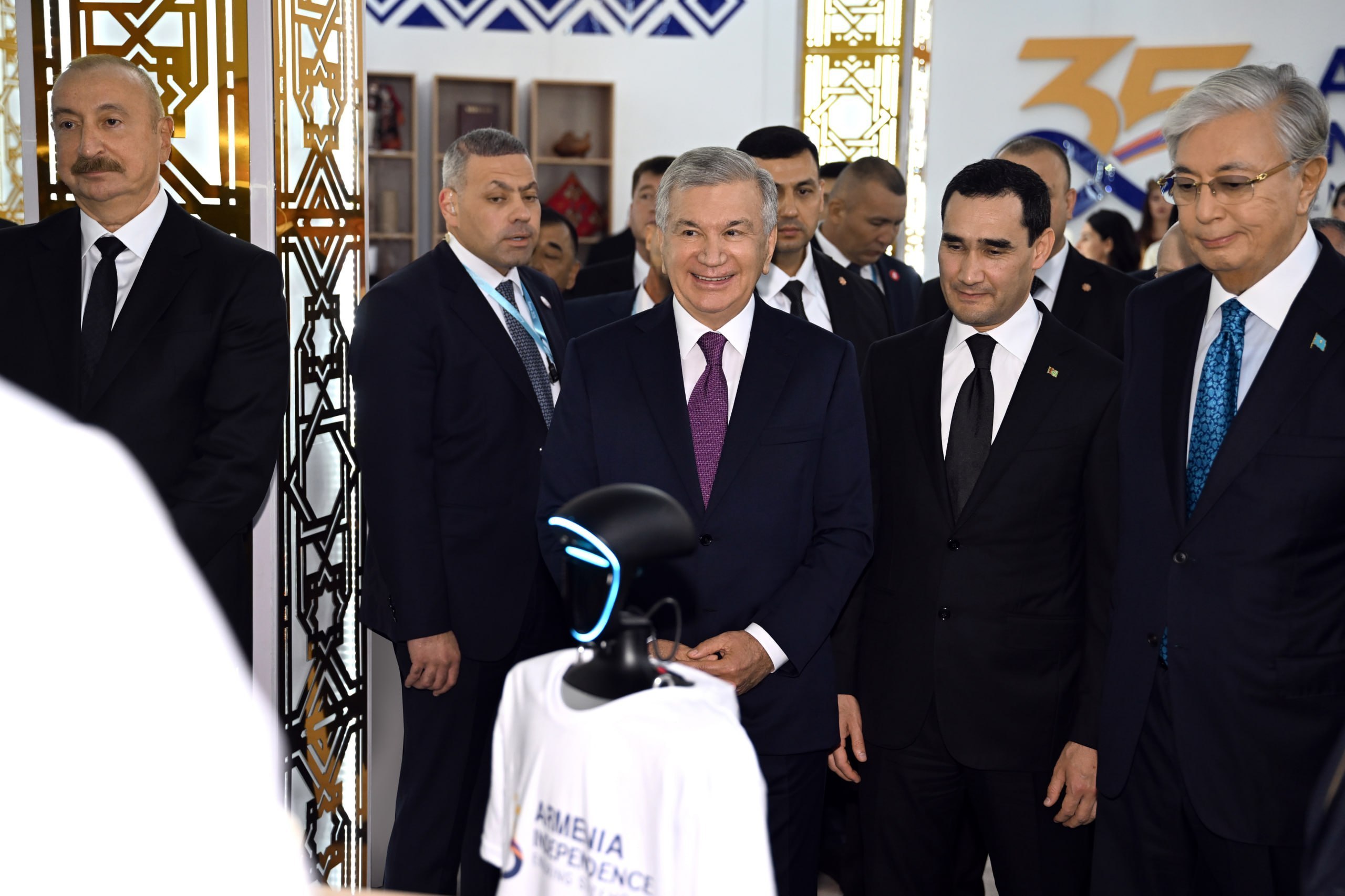
At the recent Consultative Meeting of the Heads of State of the region in Tashkent, the idea was proposed to establish a strategic framework – the Central Asian Community – to elevate integration to a new qualitative level. Historically significant was the decision to admit Azerbaijan to the Central Asian format as a full-fledged participant.
According to the President, this step will undoubtedly strengthen strategic connectivity and resilience between Central Asia and the South Caucasus.
In October, the Enhanced Partnership and Cooperation Agreement between Uzbekistan and the European Union was signed in Brussels. The Central Asia – United States Summit held in November marked the advancement of multilateral and long-term partnership to a fundamentally new stage. Last week in Tokyo, at the meeting of the leaders of the Central Asia – Japan format, key agreements were reached on education, healthcare, digital technologies, infrastructure, and industry.
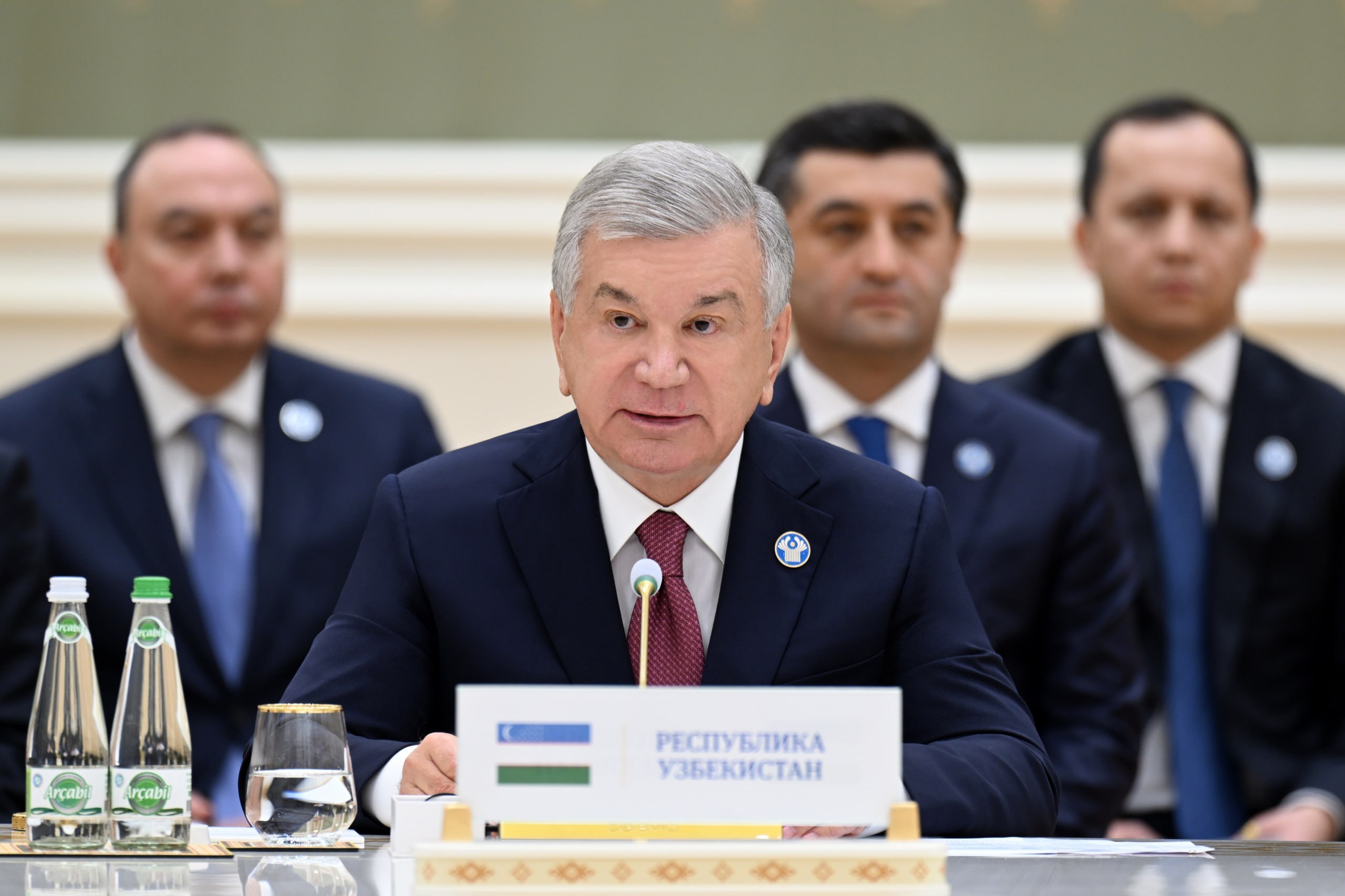
Earlier this week, a meeting with the leaders of the Commonwealth of Independent States was held in Saint Petersburg, which also outlined new areas of cooperation.
“All of this elevates our international relations to a new substantive level. We will continue to build bridges of cooperation with countries of both the near and far abroad – between East and West, North and South”, the President noted.
It was emphasized that the mahalla and good-neighborliness are complementary values that significantly strengthen social capital.
The fact that 90 percent of participants in sociological surveys consider themselves part of the mahalla community confirms a high level of civic belonging to the destiny of the Motherland and shows that this institution is, above all, a source of social solidarity.
“Regardless of the severe trials that have marked our history, we have always drawn strength from unity. In difficult times, people and the mahalla supported one another and overcame challenges together. Family helped family, neighbor helped neighbor. We must always remain faithful to this unique value and raise our youth in this spirit.
Naturally, different opinions and views may exist in society – this is a fundamental requirement of democracy.
But there is one great idea that unites our 38-million-strong people, regardless of language, nationality, or religion. These are the interests of the Motherland and of our people.
In achieving this goal, the role and influence of the mahalla are invaluable. Because if a mahalla is peaceful and united, the entire society will be peaceful and cohesive. If a mahalla develops, the whole country rises”, the President said.
Taking all this into account, the Head of State proposed that 2026 be declared the Year of Mahalla Development and Social Prosperity in the country.
Those gathered warmly supported the initiative.
In the program for the new year, these priority objectives will be reflected in the transformation of more than 9,000 mahallas across the country, primarily into spaces of compassion and care, unity, justice, and education.
“We are entering a decisive stage in building the New Uzbekistan. The work ahead requires deep transformation in every sphere and every sectoral direction”.
Our goal is clear: to join the ranks of upper-middle-income countries in the coming years.
From Fergana Valley to the Aral Sea region, from Zarafshan Valley to Kashkadarya and Surkhandarya, from Tashkent to Jizzakh and Syrdarya – wherever each of our citizens may live, starting from today, they must feel the results of reforms even more clearly in their daily lives.
Therefore, the coming year 2026 will be a year of transformation in the development of public administration, the judicial and legal system, economic sectors, education, science, healthcare, culture, sports, ecology – in all spheres without exception, the President noted.
The Head of State then separately outlined the key priority areas for 2026.
The priority area is improving the mahalla infrastructure and giving it the modern appearance of the New Uzbekistan.
Efforts to ensure comprehensive territorial development, improve neighborhood aesthetics, and enhance landscaping and amenities will continue.
Starting next year, a comprehensive approach to mahalla development will be introduced. New reforms in urbanization and sustainable urban development will be introduced.
The policy of supporting entrepreneurship will continue: in 2026, key tax rates will remain unchanged, and more than 10 trillion UZS will be allocated to entrepreneurial infrastructure projects. A total of 140 trillion UZS in resources will be provided to support the development of small and medium-sized businesses, including 43 trillion UZS earmarked for supporting women’s and youth entrepreneurship.
The second priority area is the transition of the economy to a model of technological and innovative growth.
It was emphasized that from now on, every dollar of investment must primarily serve the transfer of advanced technologies, the production of high-value-added goods with clearly defined external markets, greater efficiency in the use of energy, water, land, and other natural resources, the training of local workers to operate new technologies, and increased labor productivity.
A program for industrial development, aimed at advancing to a new technological stage and expanding value chains, will be launched. In 2026, 782 new industrial and infrastructure projects worth $52 billion will be initiated. As early as next year, 228 new large-scale facilities worth $14 billion will be commissioned.
It is projected that next year, economic growth will reach 6.6 percent, and GDP will amount to $167 billion.
Enterprises producing high-tech products based on innovation will be incentivized. Income earned by enterprise specialists from research and development activities will be exempt from taxation.
Next year, four data centers and two supercomputers will be established in Tashkent, Bukhara and Fergana regions, and Tashkent region, while artificial intelligence laboratories will be created at 15 higher education institutions. This will enable the implementation of more than 100 AI projects across key areas, including healthcare, transport, agriculture, geology, banking and finance, and public safety.
“Today, I would like to share another important piece of news with you. For the first time in the history of independent Uzbekistan, we have begun work on launching an artificial satellite into space and on preparing for the spaceflight of the first Uzbek cosmonaut – a citizen of our country”, the President said.
The third priority area is stimulating demand in the domestic market.
Over nine years, a favorable business environment has been created, and the volume and range of goods and services have expanded. Thanks to the annual provision of at least $1 billion in affordable loans to low-income families, inflation has been reduced to single-digit levels, and the population’s purchasing power has doubled.
Based on population needs, in 2026, a total of 23 trillion UZS will be allocated to mortgages, the most demand-generating instrument in the economy. A further 2 trillion 700 billion UZS will be directed to subsidizing part of the down payment and interest payments when purchasing housing. In addition, the number of preferential mortgage loans per apartment will increase by 15 percent.
To stimulate demand for services, the sector will receive 85 trillion UZS in loans and 9 trillion UZS in subsidies in 2026. In particular, 7 trillion UZS will be allocated from the budget for educational services.
An ambitious goal has been set: to double the number of foreign tourists over five years and increase the volume of tourism services to $20 billion. To this end, special attention will be paid to developing tourism infrastructure.
The growing number of tourists requires doubling transport capacity in aviation and rail. Therefore, by 2026, the national fleet will increase to 120 aircraft.
A five-year program to develop the domestic railway network will be adopted. To connect cities by high-speed trains, construction of an additional 500 kilometers of railway lines will begin in 2026. A five-year program to improve road quality and enhance transit potential will also be implemented.
The fourth priority area is the development of professions and the formation of a new labor-market architecture.
Today, driven by new technologies, digitalization, and artificial intelligence, the number, form, and content of jobs are changing rapidly worldwide. Over the next five years, 30 percent of existing professions will be fully automated, while 50 percent will require developing new skills.
“From now on, our country’s labor market must operate based on a fundamentally new architecture – as a unified mechanism integrating profession, qualifications, technology, and education”, the President said.
Starting in 2026, at least 100 technical colleges will be overhauled and equipped each year to align with technological advancements and the most in-demand professions. The number of technical colleges implementing advanced educational programs from Germany, Switzerland, the United Kingdom, China, Korea, and other countries will be increased to 100.
In 2026, the Advanced Skills Technical College and the “City of Professions” will begin operating in seven regions, with the remaining territories to follow in 2027.
Within the healthcare system, in cooperation with the British company Pearson, nurse training aligned with international standards has been launched at one technical college in each region to strengthen professional education. These technical colleges will now also introduce educational programs from Germany, Switzerland, the United States, Japan, and other countries.
On this basis, a corps of nurses that meets international standards and is proficient in foreign languages will be formed.
The fifth priority area is ensuring ecological balance, developing green energy, and the rational use of water resources.
For large enterprises, a $100 million credit line will be opened to fund the installation of filters, treatment facilities, and emission-monitoring stations for harmful substances.
It was noted that traffic congestion not only complicates people’s lives but also causes severe environmental damage. Therefore, based on international experience, an environmental sticker system for vehicles will be introduced, with stickers assigned based on harmful emissions levels.
Access to capital, regional centers, and cities will be restricted for high-emission vehicles. Measures of state support will be provided to replace such vehicles or install filters.
For those wishing to replace an old vehicle, part of the interest on auto loans will be compensated. Drivers who install filters to reduce harmful emissions will receive subsidies to cover part of the cost.
The development of public transport in Tashkent and other major cities will be a priority.
A five-year program to increase the share of environmentally friendly vehicles will be implemented. Auto loans for domestically produced electric cars will be offered at 12 percent interest, while those for imported electric vehicles will be provided at 16 percent.
Entrepreneurs will receive preferential 10 percent loans to establish charging stations and will also have the opportunity to purchase land at auction at half price.
At charging stations, electricity costs exceeding 300 UZS per kilowatt-hour will be covered by the state budget. A range of incentives will also be provided to taxi service providers that use electric vehicles.
To prevent dust storms, a green belt covering 10,000 hectares will be created in Surkhandarya, and an 84-kilometer green wall will be established in Syrdarya. In Karakalpakstan, Khorezm, Bukhara, and Navoi, 250,000 hectares will be landscaped, including 115,000 hectares on the dried seabed of the Aral Sea. Botanical and dendrological gardens will be established in each region, along with 20 shaded pedestrian streets.
Overall, 1 trillion 900 billion UZS will be allocated for environmental protection in 2026.
A total of 3 trillion 300 billion UZS will be allocated in 2026 to introduce water-saving technologies.
In addition, 1,300 kilometers of major canals will be paved, enabling up to 500 million cubic meters of water to be saved annually. Furthermore, a separate program will be implemented to convert local open drainage channels and collectors to closed systems. Large-scale projects to transition canals to a closed system will also be launched.
As part of a $160 million program, 150 kilometers of closed drainage system will be constructed in Tashkent, 197 kilometers of canals and collectors will be repaired, and 63 kilometers of new canals will be built, helping to create a cooler microclimate in the city.
The sixth priority area is the continuation of reforms to establish modern public administration and a fair judicial and legal system.
First, starting in 2026, the “Electronic Government” platform will be fully upgraded.
Next, more than 1,000 public services, over 5,000 functions and tasks, 240 databases and information systems, and the powers of more than 100,000 public servants at the mahalla, district, regional, and republican levels will be integrated into a Unified Digital Platform.
“The most important thing is that we will create an ecosystem for the provision of public services without the human factor, free from corruption and excessive bureaucracy. We will develop a system of proactive and integrated public services”, the President noted.
In the future, cases of direct procurement of goods, works, and services in public procurement will be determined solely by law.
Within the framework of constitutional reforms, the roles of regional hokims and local council chairs were separated. Starting in 2026, this system will also be introduced in 208 districts and cities.
The President emphasized the critical role of civil society institutions in ensuring the effectiveness of reforms. Therefore, the policy of supporting them will be continued. In particular, a five-year strategy for civil society development will be developed.
“I repeat: during this period of large-scale renewal, we will never deviate from the policy of openness. Ensuring freedom of speech and the press will remain our top priority”, the President stated.
Efforts to bring the judicial and legal system closer to the people will continue.
It was emphasized that the role and participation of the public in the administration of justice will be expanded. The institution of jurors will be gradually introduced into criminal proceedings – a mechanism that has demonstrated positive results in countries of the Anglo-Saxon legal tradition.
The fight against drug-related crime will be transformed into a nationwide movement, and an environment of zero tolerance toward this evil will be fostered in society.
It was instructed to establish an effective system for the prevention of violence against women and children, mobilizing all state bodies and the broad public to put an end to such negative phenomena.
“Corruption is the most serious threat that hinders the development of the state, undermines justice and the rule of law, and weakens the atmosphere of trust in society. Tolerating corruption means betraying our reforms!
In 2026, we will declare a ‘state of emergency’ in the fight against this scourge”, the Head of State said.
Across all agencies, a deputy head responsible for compliance and internal anti-corruption controls will be established. The activities of a representative of the Accounts Chamber will be strengthened. Personal responsibility for every UZS of public funds and resources will be increased.
It was noted that, amid intensifying geopolitical and economic challenges worldwide, efforts to strengthen equal and constructive relations with all countries and to pursue a balanced and open foreign policy will continue. Cooperation with authoritative international and regional organizations and economic institutions will reach a new level.
“The major achievements attained, and the new priority tasks necessitate a revision of the Uzbekistan 2030 Strategy. This document, which defines the country’s development for the next five years, will be submitted for broad public discussion and refined taking into account the views and proposals of the population”, the President noted.
It was emphasized that essential dates in the country’s socio-cultural life will be widely celebrated next year. In particular, the 35th anniversary of the Motherland’s independence will be marked as a significant celebration. It was also noted that preparations should begin now for the jubilee anniversaries marking the birthdays of Sahibkiran Amir Temur and Alisher Navoi.
“Today, history itself and life itself place a great responsibility upon us. Our Motherland is becoming a country of free people who live and work within new political, legal, social, and spiritual relations, people who think independently and are free and self-reliant.
If we act together, as one united nation, we will undoubtedly achieve the great goals we have set! I believe in our courageous and noble people! I believe in the boundless strength and potential of Uzbekistan, in the determination and energy of our youth!” the President said in concluding his Address.