
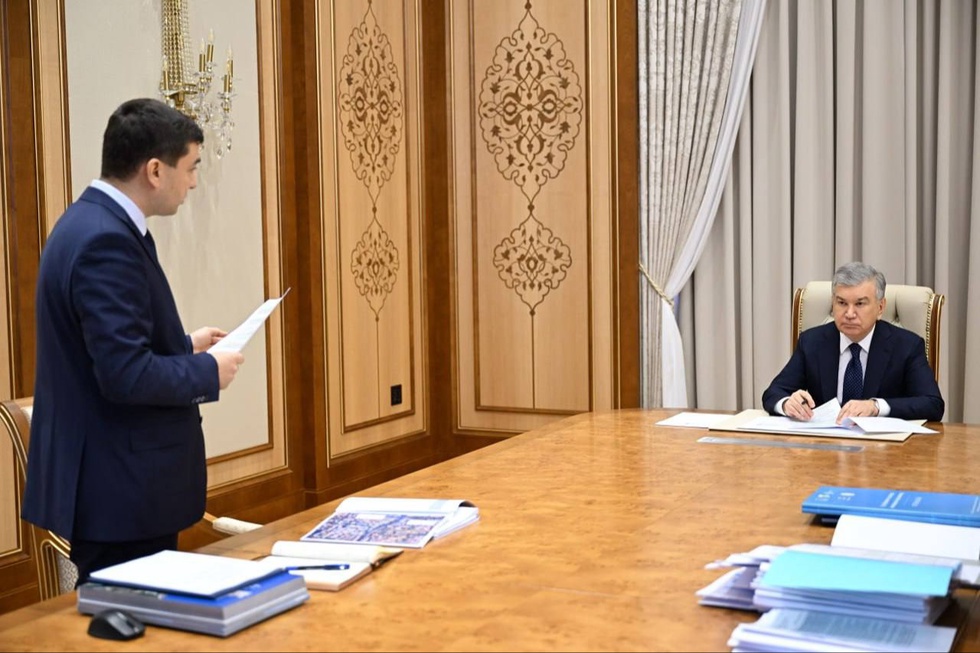
Plans to replace outdated and energy-intensive pumping units with modern, energy-efficient equipment were reviewed.
For example, the Republic of Karakalpakstan has 274 pumping stations that irrigate more than 185,000 hectares of land. More than half of the pumping units at these stations consist of equipment manufactured before 1979, and their energy consumption is two to three times higher than that of modern pumps.
Following the replacement of one outdated unit in Kegeyli district with modern energy-efficient equipment, electricity consumption was reduced by half.
Based on this positive experience, a phased replacement of 276 pumps in Karakalpakstan with modern, energy-efficient units is planned. As a result, annual electricity savings of 25 billion UZS are expected, with a 14-month payback period.
The importance of supporting local manufacturers in this process was emphasized.
Information was also presented on the achieved results and plans of the Tashkent Institute of Irrigation and Agricultural Mechanization Engineers (TIIAME)-National Research University. As noted, the university currently enrolls 8,682 students, employs 571 faculty members, and has a scientific potential of 73.5 percent.
The university has achieved strong results in international rankings, placing 501st globally in the THE World University Rankings 2026, 2nd among Central Asian and Transcaucasian countries, and 1st in Uzbekistan, and rising to 469th in the QS World University Rankings 2026.
Last year, a modern 200-seat IT center was built on the university campus, a digital library was launched, and a registrar’s office was established. The university has undergone international accreditation for a five-year term. Compatriots who graduated from universities ranked in the world’s top 300, as well as foreign professors, have been engaged in the educational process.
Plans include creating a national digital platform for climate change analysis, constructing space observation stations on the university campus, and developing infrastructure to receive satellite data.
In addition, the university will launch a master’s program in Water Diplomacy, with plans to grant the specialty international status. The Head of State instructed that specific measures be developed to include the TIIAME among the world’s top 300 universities.
During the presentation, special attention was also paid to issues of international cooperation.
As noted, in recent months, Tashkent hosted the first Central Asian conference on drinking water supply and wastewater services, as well as an international conference marking the entry into force of the Water Code.
It was emphasized that, as a logical continuation of these events, the Tashkent International Water Week is planned for March next year. The forum will serve as a platform to strengthen cooperation with international institutions and regional countries, as well as to facilitate dialogue on the rational use of water resources and the adoption of green technologies.
Instructions were given to organize this event at a high level and to ensure thorough preparations for the international forum on water-saving technologies in the Aral Sea region, which will also be held next year.